Water softener installation in Spartanburg, SC



Convenient & Flexible Scheduling

Professional & Experienced Technicians

Established Reputation with Excellent Reviews

Competitive Pricing for Superior Work

Over 40 Years of Experience

We Pride Ourselves On Delivering Quality Work
Protect your plumbing, fixtures, and appliances from hard water damage. CB Smith Plumbing installs and services water softeners across Spartanburg and the surrounding Upstate.
Hard water is the single most consistent source of long-term plumbing damage in Spartanburg homes that most homeowners never connect to a water quality problem. The mineral content in Spartanburg’s water supply, primarily calcium and magnesium, accumulates inside pipes, on fixture surfaces, inside water heaters, and throughout any appliance connected to the water supply. Over time, that accumulation restricts flow, degrades fixture finishes, reduces water heater efficiency, and shortens the service life of every water-using appliance in the home. A properly sized and installed water softener eliminates the source of that damage before it reaches your plumbing system.
CB Smith Plumbing provides water softener installation in Spartanburg, SC for homeowners across Spartanburg, Greenville, and Cherokee Counties. Our technicians assess each home’s water hardness level, daily water consumption, and plumbing configuration before recommending a unit, and they install what the home actually needs rather than what is most convenient to put in. A softener that is undersized for the household’s demand, incorrectly positioned in the plumbing system, or improperly configured for regeneration will not protect the home the way it should.
Scheduled installations are available, and CB Smith handles the complete scope of the job from water testing through system startup and salt level confirmation.
Call (864) 574-4275
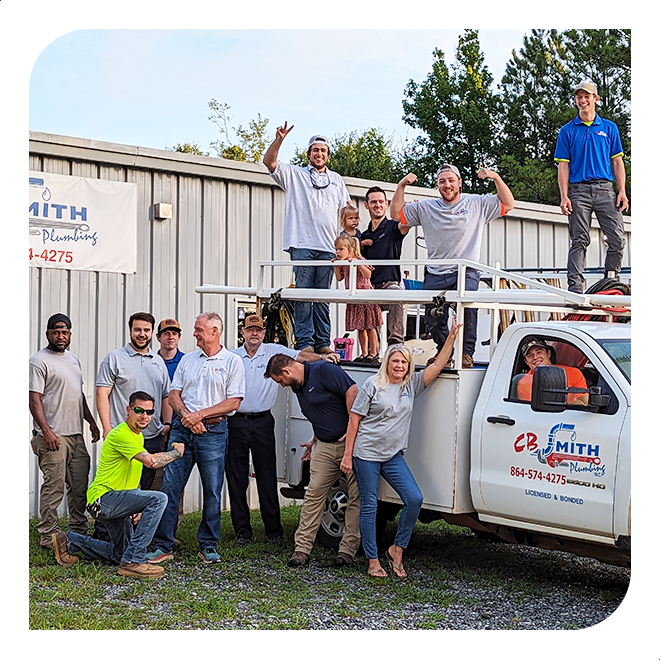
Why choose CB Smith Plumbing
The water softener installation service Spartanburg homeowners trust
Installing a water softener correctly requires more than connecting a unit to the water line. It requires an accurate hardness assessment, proper sizing to household demand, correct positioning in the plumbing system relative to the water heater and other appliances, and correct programming of the regeneration cycle. Here is what CB Smith brings to every water softener installation in Spartanburg.
Accurate water hardness assessment before any recommendation
CB Smith tests the water hardness at the property before recommending a unit. The grain capacity of a softener must be matched to both the water hardness level and the household's daily water consumption. A unit sized on a guess rather than a measurement will either exhaust its capacity too quickly or waste salt through unnecessary regeneration cycles.
Correct system positioning for whole-house protection
A whole-house water softener must be installed on the main supply line upstream of the water heater and all fixtures to provide meaningful protection. CB Smith evaluates the home's plumbing configuration and installs the unit in the correct position to deliver treated water to every fixture and appliance in the home.
Complete installation handled by one licensed team
CB Smith manages water testing, unit selection guidance, all plumbing connections, bypass valve installation, drain line connection, brine tank setup, and system programming as a single installation package. Nothing is left for the homeowner to configure or connect independently.
Honest assessment of repair versus replacement
An existing softener that is underperforming is not always a replacement situation. CB Smith diagnoses the actual cause, whether it is a resin bed that has fouled, a failed control valve, or a unit that was never correctly sized, and recommends the appropriate remedy rather than defaulting to a new unit sale.
282 five-star Google reviews across over four decades in Spartanburg
CB Smith's reputation reflects the same straightforward approach to water softener work that we bring to every plumbing service we provide.
Quality workmanship we stand behind
We do not consider a job complete until it is done correctly. Our technicians clean up after every visit and leave your home exactly as they found it.
Water softener services we provide in Spartanburg, SC
CB Smith Plumbing handles the full range of water softener and water conditioning services for residential properties across Spartanburg, Greenville, and Cherokee Counties. Every service is performed by licensed plumbers with direct experience in residential water treatment system installation and service.
Whole-house water softener installation in Spartanburg, SC.
CB Smith installs salt-based ion exchange water softeners on the main supply line of Spartanburg homes, providing softened water to every fixture, appliance, and water heater in the house. Installation includes water hardness testing, unit sizing, all plumbing connections, bypass valve installation, drain line connection, brine tank setup, and regeneration cycle programming.
Water softener replacement
When an existing softener has reached the end of its service life or is no longer performing adequately for the household's demand, CB Smith removes the old unit and installs a correctly sized replacement. The new system is tested at startup to confirm it is delivering treated water at the correct hardness level.
Water softener repair in Spartanburg, SC
Control valve failures, fouled resin beds, brine draw failures, and regeneration cycle malfunctions are among the most common service needs for installed softeners. CB Smith diagnoses the specific failure and repairs it using appropriate components, restoring the system to correct operation without an unnecessary full replacement.
Water hardness testing and system assessment.
For homeowners who are unsure of their water quality or the performance of an existing treatment system, CB Smith performs a water hardness test and provides a clear assessment of the current situation, what the water quality shows, what the existing system is or is not doing, and what options are available.
Salt-free water conditioner installation
For homeowners who prefer to avoid the maintenance requirements of a salt-based system or who are on a low-sodium diet, CB Smith installs salt-free water conditioning systems that address scale formation without ion exchange or salt regeneration.
Annual softener service and resin inspection
Ion exchange resin beds have a finite service life and can be fouled by iron, sediment, or chlorine exposure over time. CB Smith performs annual service inspections that assess resin condition, verify regeneration cycle programming, and confirm the system is delivering treated water at the correct hardness level.
How CB Smith handles a water softener installation in Spartanburg
You call and describe your water quality concerns
When you reach CB Smith Plumbing at (864) 574-4275, tell us about the symptoms you are noticing, scale on fixtures, spotting on glassware, reduced water heater performance, dry skin and hair, or soap that does not lather properly. This information, combined with a water hardness test at the property, gives us the complete picture we need to recommend the right system.
The technician tests the water and assesses the plumbing configuration
Your plumber measures the water hardness level at the property in grains per gallon, evaluates the household's daily water consumption, inspects the main supply line entry point and available installation location, and confirms the drain line and electrical access required for the softener to operate correctly.
A unit recommendation is made before any purchase
Based on the hardness test results and the household demand assessment, CB Smith recommends a specific unit size that will handle the home's daily volume without exhausting capacity prematurely or regenerating more frequently than necessary. The recommendation is explained so you understand why that unit is the right choice.
The installation is completed as a full-scope job
CB Smith installs the softener on the main supply line upstream of the water heater, installs a bypass valve to allow system service without interrupting water supply to the home, connects the drain line for brine discharge, sets up the brine tank with the initial salt charge, and programs the regeneration cycle to match the household's hardness level and daily consumption.
The system is tested at startup and results are confirmed
Once installed, CB Smith runs the system through its first regeneration cycle, tests the treated water hardness at a downstream fixture to confirm the unit is softening to the correct level, and verifies that the brine draw and regeneration sequence are operating correctly.
Maintenance requirements are reviewed with you
Your technician explains the salt type appropriate for the unit, the recommended salt level to maintain in the brine tank, the signs that the resin bed may need attention, and what to expect from the system over time before leaving the property.
What Spartanburg homeowners need to know before choosing a water softener
Hard water damage in Spartanburg homes is cumulative and largely invisible until it has already caused significant harm. The mineral scale that forms inside water heater tanks reduces heating efficiency gradually, adding to the energy cost of every hot water use and shortening the unit’s service life. The same scale coats the interior walls of supply pipes over years of use, narrowing the effective diameter and restricting flow in ways that are easy to mistake for other plumbing problems. Fixture aerators and showerheads clog with mineral deposits. Dishwashers and washing machines that operate on hard water accumulate scale on internal components that reduces their efficiency and causes premature failure. A water softener installation in Spartanburg, SC interrupts this process at the source before the damage compounds further.
The most important variable in selecting a water softener for a Spartanburg home is grain capacity matched to actual household demand. Grain capacity describes how much hardness mineral the resin bed can remove before it must regenerate, and a unit sized on a bathroom count or square footage estimate rather than a measured hardness level and actual daily water consumption will either regenerate too frequently, wasting salt and water, or exhaust its capacity before regeneration, allowing hard water to pass through to the home’s fixtures and appliances. CB Smith measures the hardness level at the property and calculates the required grain capacity from the actual figures rather than from a general guideline.
Placement in the plumbing system is the second variable that determines whether whole-house water softener installation in Spartanburg delivers its full value. The softener must be installed on the main supply line at a point upstream of the water heater and all branch lines that serve fixtures in the home. A unit installed downstream of the water heater does not protect the appliance that is most vulnerable to scale damage. A unit installed on only one branch of the supply system leaves the rest of the home’s fixtures and appliances on untreated water. CB Smith evaluates the plumbing configuration at each property before installation to confirm the unit is positioned correctly for whole-house protection.
Water softener repair in Spartanburg, SC following a loss of performance is more common than many homeowners realize, because most softener failures develop gradually rather than all at once. A control valve that is not completing its regeneration cycle correctly, a resin bed that has been fouled by iron or high chlorine exposure over time, or a brine injector that is drawing insufficient salt solution will all cause the unit to pass progressively harder water without any obvious external indication that something is wrong. The symptom that finally alerts the homeowner is usually the return of scaling on fixtures or spots on glassware, at which point the unit has been underperforming for some time. CB Smith diagnoses these failures accurately and distinguishes between a repair that restores the existing system and a replacement that is genuinely warranted.
Call (864) 574-4275
What Spartanburg homeowners can expect from a CB Smith water softener installation
How long does a water softener installation take? A standard whole-house water softener installation in a Spartanburg home with accessible plumbing, a nearby drain connection, and a suitable electrical outlet for the control head typically takes three to five hours. Installations that require supply line modifications, new drain line runs, or work in difficult-to-access utility spaces take longer. CB Smith gives you a realistic time estimate during the assessment so you can plan accordingly.
Will a water softener affect my water pressure? A correctly sized and properly installed water softener does not produce a meaningful reduction in water pressure under normal flow conditions. The system is installed with a bypass valve that allows water to flow directly to the home without passing through the softener during servicing, and the pressure differential across the resin tank under normal service flow is negligible. If you are experiencing low water pressure, that is a separate issue from the softener installation and CB Smith can assess it independently.
What type of salt should I use in my water softener? The type of salt recommended depends on the softener model and the water quality at the property. High-purity evaporated salt pellets are the standard recommendation for most residential installations because they leave minimal residue in the brine tank and reduce the frequency of tank cleanout. For properties with elevated iron content in the water supply, iron-out or rust-removing salt formulations help prevent iron fouling of the resin bed over time. CB Smith explains the appropriate salt type for your specific unit during the installation handoff.
How do I know if my existing water softener is still working correctly? The simplest field check is to test the hardness of the water coming from a treated fixture using an inexpensive test strip. If the treated water shows hardness levels close to the incoming supply, the softener is not softening effectively and needs attention. Other indicators include the return of scale deposits on fixtures, spots on clean glassware from the dishwasher, and salt that is not depleting from the brine tank at the expected rate. CB Smith performs a complete diagnostic on underperforming units and distinguishes between a repair and a replacement recommendation based on what the diagnosis actually shows.
Can CB Smith install a water softener in an older Spartanburg home with limited utility space? Yes. CB Smith has installed water softeners across the full range of Spartanburg residential plumbing configurations, including older homes with limited utility space, crawl space plumbing, and supply line configurations that require adaptation for softener installation. The assessment visit identifies any installation constraints before the unit is purchased so there are no surprises on installation day.
Call CB Smith Plumbing at (864) 574-4275
See what others are saying
CB Smith Plumbing has built its reputation in Spartanburg one job at a time since 1982. Here is what local homeowners have to say about working with our team.
EXCELLENTTrustindex verifies that the original source of the review is Google. After over 20 years of doing business with Smith Plumbing who actually plumbed my home when it was built and today was no exception...excellent excellent service as usual. Highly recommended to all.Posted onTrustindex verifies that the original source of the review is Google. Joe is the manPosted onTrustindex verifies that the original source of the review is Google. Greatly appreciatedPosted onTrustindex verifies that the original source of the review is Google. Mike from CB Smith did a superb job! He communicated my different repair options and was very informative. Will definitely recommend and use again if needed.Posted onTrustindex verifies that the original source of the review is Google. Mike Walsh did an amazing job for us. Very persistent in the face of challenges. Would highly recommend him and CBSmith.Posted onTrustindex verifies that the original source of the review is Google. Michael did a geat job. He was knowlegeable and explained the issue thoroughly. Completed the repair promptly and was very professional and courteous. Thank you, David CunninghamPosted onTrustindex verifies that the original source of the review is Google. I would definitely recommend this company. 5 stars!! Impressed with the call back about my appointment , very pleasant and professional. Joe the tech was quite personable and knowledgeable. I was informed of the issue and was shown pictures before and after . Very satisfied!!Posted onTrustindex verifies that the original source of the review is Google. CB Smith combines top notch ethics with high quality workmanship. Their employees are honest and hard working and they'll always be the first plumber my family calls.Posted onTrustindex verifies that the original source of the review is Google. They did a great job and I would highly recommend them.Posted onTrustindex verifies that the original source of the review is Google. Make CB Smith your plumber. They are great. Unfortunately CB Smith wasn’t available on the weekend so I called another plumber. Bad mistake. After having a bad experience with the other plumber that sent my dog to the hospital, my husband called Joe with CB Smith as we had a great experience with them before. Joe has guided me through a large sewer issue. Mike Welch came over as our toilet was backing up. While not even making much money, he has been responsive to calls and texts. He has provided advice and gave us options that have really helped us save thousands by doing some things ourself. Joe sent Mike Welch over to help us. Mike was able to camera the sewer pipe and let us know exactly where it was. Going out to the street and provide us where he was running into an issue. It is now looking like it’s a water company issue. Even though Joe won’t be making much on this issue, he still says to keep him in the loop. Such an awesome person. Please give Joe, Mike and CB Smith Plumbing your business. You won’t regret it.
Frequently asked questions about water softener installation in Spartanburg, SC
How do I know if I need a water softener in Spartanburg?
The most common signs of hard water in Spartanburg homes include white or yellowish scale deposits on faucet aerators and showerheads, spots on glassware and dishes after washing, soap that does not lather readily, dry or irritated skin and hair after showering, and reduced water heater performance over time. If you are noticing any of these symptoms, a water hardness test will confirm the level of hardness and provide the information needed to determine whether a softener is warranted and what size is appropriate for your household.
What is the difference between a water softener and a water conditioner?
A salt-based water softener uses an ion exchange process to physically remove calcium and magnesium ions from the water supply and replace them with sodium ions, producing water that is chemically soft. A salt-free water conditioner does not remove hardness minerals but alters their structure so they are less likely to form scale deposits on surfaces and inside pipes. Conditioners require no salt, produce no brine discharge, and require less maintenance, but they do not reduce the hardness level of the water in the way that a salt-based softener does. CB Smith explains the distinction and the tradeoffs during the assessment so you can make the choice that fits your household’s priorities.
How much salt does a water softener use in Spartanburg?
Salt consumption depends on the hardness level of the water supply, the household’s daily water consumption, and the efficiency of the softener’s regeneration programming. A correctly programmed unit regenerates only as frequently as the resin bed’s capacity requires, minimizing salt usage while maintaining full protection. CB Smith programs regeneration cycles based on the measured hardness level and the household’s actual consumption rather than a default factory setting, which reduces salt usage compared to a unit running on a generic program.
How long does a water softener last?
A well-maintained water softener has an expected service life of fifteen to twenty years in most residential applications. The control valve and resin bed are the primary components subject to wear, and both can be serviced or replaced independently of the full unit if they fail before the rest of the system reaches the end of its life. The most important factor in maximizing service life is consistent maintenance, including keeping salt in the brine tank at the recommended level, periodic brine tank cleanout to remove sediment, and resin bed inspection every few years to confirm the media is performing correctly.
Does softened water affect the taste of drinking water?
Salt-based water softeners add a small amount of sodium to the treated water, proportional to the hardness level being removed. For most households with moderate hardness levels, this addition is not perceptible in the taste of the water. For households that prefer to keep their drinking water unsoftened, CB Smith can configure a bypass on the cold water line to the kitchen sink so that drinking water bypasses the softener while all other fixtures and appliances receive treated water.
Can CB Smith service a water softener that was installed by another company?
Yes. CB Smith services, repairs, and replaces water softeners of all brands regardless of original installer. The diagnostic process is the same: CB Smith tests the treated water hardness, inspects the control valve and resin bed condition, verifies the brine draw and regeneration cycle operation, and identifies the specific cause of any underperformance before recommending a remedy. If the existing unit can be repaired cost-effectively, that is what CB Smith recommends. If replacement is the more practical outcome, that recommendation is made with the diagnostic findings to support it.
CB Smith Plumbing is ready to address your Spartanburg home's hard water.
Hard water damage is preventable, and a correctly installed and maintained water softener is the most direct way to prevent it. CB Smith Plumbing brings the assessment discipline, the installation experience, and the ongoing service capability to ensure your Spartanburg home's water treatment system delivers the protection it is designed to provide from day one and every day after. Call CB Smith Plumbing at (864) 574-4275
Fill out the form below or call us today!