
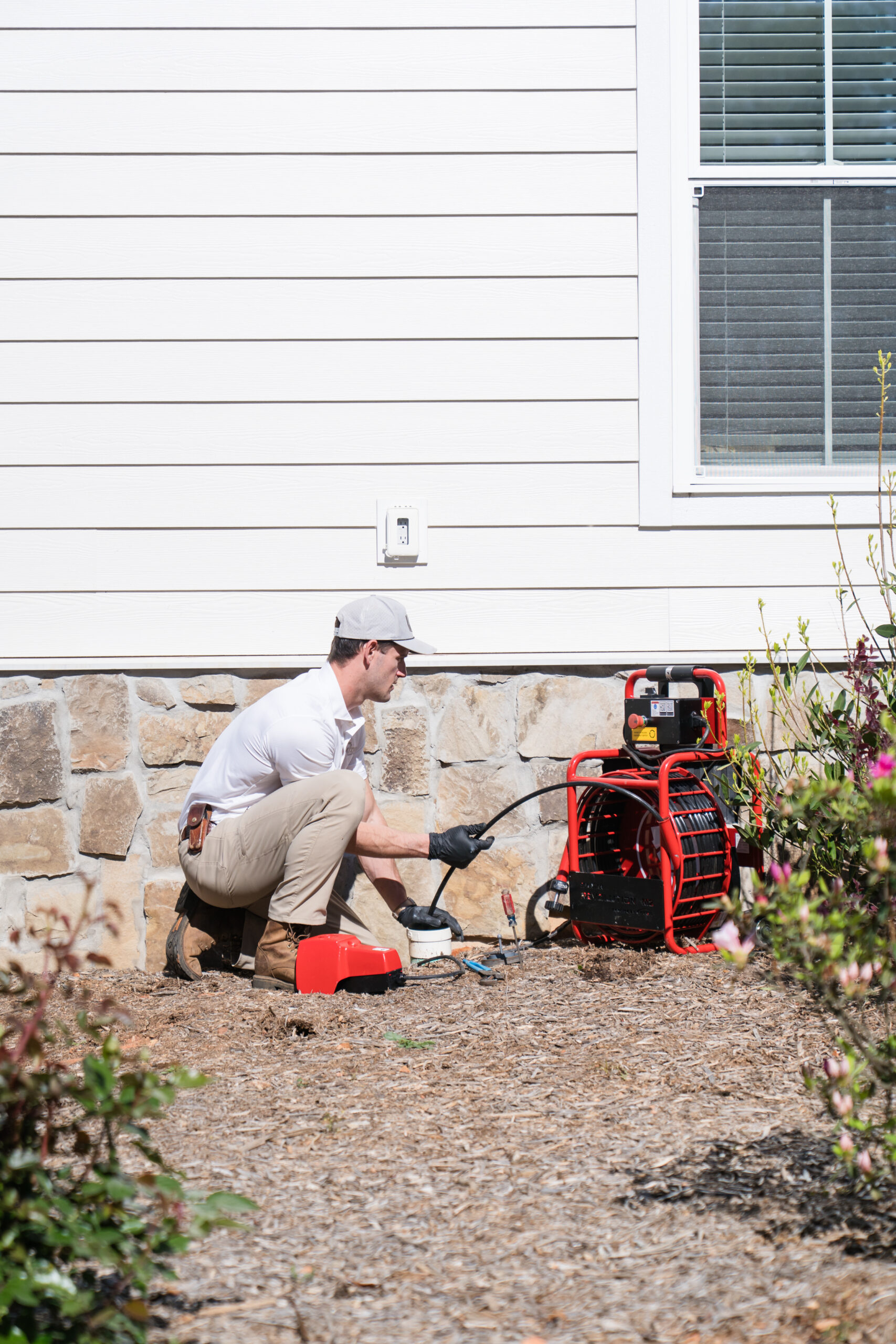

A sump pump is one of those systems you forget about entirely until the moment you need it, and if it does not work at that moment, the consequences are immediate and expensive. Sump pump maintenance in Roebuck matters because this Spartanburg County community sits in the Piedmont region, where clay-heavy soils hold water against foundations instead of draining it away, and the Upstate’s seasonal rain patterns can push groundwater levels high enough to test any basement or crawl space protection system.
According to FEMA, just one inch of water inside a home can cause up to $25,000 in damage, and the agency’s data consistently shows that flooding is the most frequent natural disaster in the United States.
Roebuck is a residential community south of Spartanburg, where homes range from established properties on large lots along the Old Georgia Road corridor to newer construction in expanding subdivisions. Many of these homes have basements, crawl spaces, or low-lying utility areas that rely on a sump pump to manage groundwater and keep the space dry.
The pump sits in a pit at the lowest point of the space, waits for water to rise, and activates automatically to push that water out and away from the foundation. When it works, you never think about it. When it fails, the water has nowhere to go but into your home.
This article covers the maintenance that keeps your sump pump ready for the storms and groundwater surges that define the Upstate’s wet seasons, explains why the Piedmont soil conditions under Roebuck make this maintenance especially important, and walks through the warning signs that tell you the system needs attention before the next heavy rain.
In this article, you will learn about:
- How a sump pump protects your home and what causes it to fail
- The quarterly maintenance routine that prevents most failures
- Why Roebuck’s soil and drainage conditions put extra demand on sump pumps
- The warning signs that your pump needs repair or replacement
- When to call a professional and what a sump pump inspection covers
Keep reading to make sure your system is ready before the next storm tests it.
How a sump pump protects your home and what causes it to fail
A sump pump system is straightforward in concept. A pit, called a sump basin, is installed at the lowest point of your basement or crawl space. Groundwater and rainwater that seeps through or around the foundation collects in the basin through drainage channels or natural water migration.
When the water level in the basin rises to a set point, a float switch activates the pump, which pushes the water through a discharge pipe and away from the foundation. Once the water level drops, the pump shuts off and waits for the next cycle.
This process runs automatically and silently, which is exactly why most homeowners never think about it. The pump may sit idle for weeks during dry weather and then run frequently during a heavy rain event, cycling on and off as water continues to enter the basin. That transition from idle to heavy use is where most failures happen.
The most common causes of sump pump failure
Sump pump failures almost always occur at the worst possible time because the conditions that cause the pump to fail are the same conditions that produce the most water. Understanding the failure modes helps you maintain against them.
Power outages are the single most common cause of sump pump failure. Heavy storms produce both the water that the pump needs to remove and the power disruptions that prevent it from running. A pump without power is just a piece of metal sitting in a pit while water rises around it. Battery backup systems and generator connections address this vulnerability, and they are worth the investment for any Roebuck home that depends on a sump pump for water management.
Float switch problems are the second most common cause. The float switch is the mechanism that tells the pump when to turn on and off. If the float gets stuck against the side of the basin, tangled in the power cord, or blocked by debris, the pump cannot activate even though the water level is rising. This is a maintenance issue, not a mechanical failure, and it is entirely preventable with regular inspection.
Overwhelmed capacity occurs when the volume of incoming water exceeds what the pump can move. A pump rated for normal groundwater seepage may not keep up with a major storm event, especially in the Piedmont clay soils around Roebuck where water drains slowly and accumulates around foundations faster than it can percolate away.
Mechanical wear is the gradual end-of-life process that affects every pump. Most residential sump pumps last 7 to 10 years with regular maintenance. After that, impeller wear, motor degradation, and bearing fatigue increase the likelihood of failure under load. A pump that ran reliably for eight years may fail during the ninth year’s first major storm because the motor no longer has the capacity it once did.
Clogged intake or discharge lines prevent the pump from moving water even when everything else is working. Silt, gravel, debris, and mineral deposits can block the intake screen at the bottom of the pump or accumulate in the discharge pipe over time. In Roebuck, where construction activity in new subdivisions can disturb soil and increase sediment in groundwater, intake clogging is a practical concern.
The quarterly maintenance routine that prevents most failures
Sump pump maintenance is simple, takes less than 30 minutes, and can be done by any homeowner with no special tools. The key is doing it consistently, at least every three to four months, and always before the heaviest rain seasons.
The bucket test
The most important maintenance task is confirming that the pump actually works. You can test this by slowly pouring a five-gallon bucket of water into the sump basin. Watch the float switch as the water level rises. The pump should activate when the water reaches the trigger point, remove the water from the basin, and shut off automatically once the basin is empty.
While the pump is running, listen to the motor. A healthy pump runs smoothly and steadily. Grinding, rattling, or vibrating noises can indicate bearing wear, an obstructed impeller, or loose mounting hardware. If the pump does not activate, does not fully empty the basin, or does not shut off after the water is removed, the system needs professional attention.
This test simulates the real operating conditions the pump will face during a storm. Running it every three months confirms that every component, the float switch, the motor, the impeller, and the discharge path, is ready.
Clean the basin and check the float
Between tests, inspect the sump basin for debris. Over time, silt, gravel, small stones, and construction material can wash into the basin and settle at the bottom. If the debris level rises high enough, it can block the intake screen on the pump or interfere with the float switch’s range of motion.
Remove any visible debris from the basin, and make sure the float switch moves freely through its full range without catching on the pump body, the discharge pipe, or the power cord. A float that cannot rise freely cannot activate the pump, regardless of how much water enters the basin.
If the basin has a cover, check that it is properly seated and that the vent hole in the cover is clear. The vent allows air to escape as water enters the basin and prevents the cover from creating a vacuum that could interfere with the float mechanism.
Inspect the discharge line
The discharge pipe carries water from the pump to a point outside and away from the foundation. Follow the discharge line from the pump to its exit point outside the house. Confirm that the pipe is intact, that the connections are tight, and that the exit point is clear of dirt, leaves, ice, or any other obstruction.
The discharge should direct water at least six feet away from the foundation, ideally to a point where the grade slopes away from the house. If the discharge empties too close to the foundation, the water it removes can re-enter the soil around the basement walls and cycle right back into the sump basin, creating a loop that overworks the pump and never actually solves the problem.
Check the check valve on the discharge line as well. The check valve is a one-way valve that prevents water in the discharge pipe from flowing back into the basin after the pump shuts off. If the check valve fails, the pump has to re-pump the same water every cycle, which doubles the workload and accelerates wear. A failed check valve often produces a noticeable thumping sound when the pump shuts off, caused by the backflowing water hitting the closed impeller.
Verify the power source
Confirm that the pump is plugged into a functioning outlet, ideally a ground fault circuit interrupter (GFCI) outlet, and that the cord is in good condition with no fraying, cracking, or exposed wire. Avoid using extension cords for sump pumps. The pump should be connected directly to a dedicated outlet.
If your system has a battery backup, test the backup by unplugging the primary pump and running the bucket test on the battery unit. Check the battery charge level and replace the battery according to the manufacturer’s schedule, typically every two to three years. A battery backup that has not been tested or replaced is not backup at all.
Why Roebuck’s soil and drainage conditions put extra demand on sump pumps
Not every community places the same demands on a sump pump system. Roebuck’s specific soil conditions and topography create an environment where sump pumps work harder and more frequently than they would in a sandier, better-draining landscape.
Piedmont clay holds water against your foundation
Roebuck lies in the Carolina Piedmont, where the dominant soil type is clay-heavy with low permeability. Clay soil absorbs water slowly and retains it for extended periods, which means rainwater does not drain away from your foundation quickly. Instead, it saturates the soil around the basement walls and creates hydrostatic pressure that pushes water through any available opening, including foundation cracks, joint gaps, and the interface between the footing and the wall.
This hydrostatic pressure is what drives groundwater into the sump basin, and in heavy-clay environments like Roebuck, the pressure can remain elevated for days after a storm ends because the soil releases its stored water so slowly. A sump pump in Piedmont clay works longer per rain event than a pump in sandy, well-draining soil, which means more operating hours, more wear cycles, and a shorter effective lifespan if maintenance is not kept up.
Seasonal rain patterns and groundwater fluctuation
The Upstate of South Carolina receives an average of around 50 inches of rainfall per year, with the heaviest periods typically in late winter and spring. These are the months when the water table rises, saturated clay soils cannot absorb additional rainfall, and sump pumps run most frequently.
The transition from dry summer conditions to wet winter and spring creates a period of elevated risk because the pump may have been idle for weeks or months during the dry period. A float switch that sat in one position without moving, a discharge line that accumulated a partial blockage from sediment during the dry season, or a battery backup that lost charge during months of inactivity can all produce failure at the exact moment the pump needs to perform.
This is why pre-season testing is so critical. The quarterly maintenance schedule should always include a test before the wettest season, ensuring the system is fully operational when demand is highest.
New construction and grading changes
Roebuck is an active area for new residential construction, with several subdivisions developing south of Spartanburg. Construction activity can alter surface drainage patterns, compact soil in ways that redirect groundwater flow, and increase sediment in the water that reaches sump basins in nearby homes.
If new construction has occurred near your property and you notice your sump pump running more frequently than it used to, the change in drainage may be the cause. Increased pump activity is not necessarily a problem if the pump is sized appropriately, but it does mean the system is accumulating operating hours faster and may need maintenance and eventual replacement sooner than originally expected.
Warning signs that your pump needs repair or replacement
Between quarterly tests, your sump pump may give you signals that something has changed. Paying attention to these signs lets you address problems before the next heavy rain, rather than discovering them during a storm when the basement is already taking on water.
The pump runs constantly or cycles too frequently
A pump that runs nonstop or turns on and off in rapid cycles is either overwhelmed by incoming water or has a mechanical issue. Constant running can indicate a stuck float switch, a failed check valve that allows water to flow back into the basin after each cycle, or a pump that is undersized for the actual water volume it needs to handle.
Rapid cycling, where the pump turns on and off every few seconds or minutes without extended run time, often points to a float switch that is set too close to the pump’s shutoff level. The pump activates, moves a small amount of water, shuts off, and the slight remaining inflow immediately triggers it again. This cycling pattern burns out motors faster than steady operation and should be corrected by adjusting the float position or having a plumber evaluate the basin depth and pump sizing.
Unusual noises during operation
A healthy sump pump produces a steady, low-pitched hum during operation. New sounds, including grinding, rattling, screeching, or thumping, indicate mechanical problems:
- Grinding or screeching suggests bearing failure or a jammed impeller
- Rattling or vibrating can indicate loose mounting hardware or a component that has shifted inside the housing
- Thumping when the pump shuts off typically points to a failed check valve allowing water to fall back through the impeller
Any new noise from the sump pump warrants investigation, ideally before the next storm rather than during it.
Visible rust, corrosion, or moisture around the pump
If the pump housing shows visible rust or corrosion, the internal components are likely in worse condition. A pump that is corroding externally in a wet environment is reaching the end of its useful life, and the risk of motor failure or housing crack increases with each operating cycle.
Moisture on the floor around the sump basin, separate from normal condensation, can indicate a basin seal failure, a cracked discharge fitting, or a pump housing leak that allows water to escape the basin rather than being pumped out.
The pump is more than 7 to 10 years old
Age alone is a valid reason to evaluate a sump pump, even if it appears to be working. The typical residential sump pump has a service life of 7 to 10 years, and pumps that operate frequently in high-sediment or hard-water environments may reach the end of that range sooner. According to the EPA, household water management failures are a leading source of residential property damage, and a proactive pump replacement at year 8 or 9 costs far less than the water damage that results from a failure at year 10.
If your pump is approaching the end of its expected life, schedule a professional assessment to determine whether a replacement makes more sense than continued maintenance on an aging unit.
When to call a professional and what a sump pump inspection covers
Homeowners can handle the quarterly bucket test, basin cleaning, and visual inspections on their own. Professional service becomes necessary when the system shows symptoms that require disassembly, electrical testing, or mechanical repair, or when the pump is being replaced.
Situations that call for a professional
Contact a licensed plumber when you encounter any of the following:
- The pump does not activate during the bucket test despite being plugged in and powered
- The pump runs but does not move water effectively, which can indicate impeller failure or a discharge line obstruction
- Frequent cycling that does not respond to float switch adjustment
- Visible corrosion, cracking, or housing damage on the pump
- Water damage in the basement or crawl space despite a pump that appears to be running, which may indicate undersizing, discharge routing problems, or a secondary water entry point that the pump cannot address
- The need to install or replace a battery backup system, which involves electrical work near water
- The pump is at or past its expected lifespan and needs evaluation for replacement
What a professional sump pump inspection includes
A thorough inspection by a licensed plumber covers the full system:
- Testing the pump by activating it under load and measuring the discharge volume and rate
- Inspecting the float switch mechanism for proper operation and range of motion
- Cleaning the sump basin and intake screen
- Checking the discharge line for obstructions, proper routing, and adequate distance from the foundation
- Testing the check valve for proper closure
- Evaluating the battery backup system, if installed, including battery age and charge level
- Assessing the pump’s age, condition, and remaining useful life
- Recommending sizing adjustments if the current pump is inadequate for the home’s actual water management needs
This inspection fits naturally into an annual plumbing maintenance visit, where the plumber also checks supply lines, drain connections, the water heater, and the rest of the system. Combining the sump pump check with the broader inspection ensures nothing is missed.
Conclusion
Your sump pump asks almost nothing of you in return for protecting one of the most expensive parts of your home. The maintenance takes minutes, the testing is simple, and the cost of keeping the system in working order is negligible compared to the cost of a single basement water event.
Set a reminder to test the pump every three months. March, June, September, and December work well as a quarterly schedule, with the March test serving as your pre-storm-season verification. Between scheduled tests, listen for the pump during and after heavy rain. If it is running normally, you know the system is doing its job. If it is not running when it should be, or if it sounds different than it used to, investigate before the next storm arrives.
Check the discharge line exit point every time you mow the yard or do outdoor maintenance. Make sure it is clear, aimed away from the foundation, and not blocked by landscaping, mulch, or debris. Keep the sump basin cover in place to prevent debris and small items from falling into the pit.
If your Roebuck home has a sump pump that has not been tested recently, if the system is approaching the end of its expected life, or if you have noticed any of the warning signs described in this article, schedule an inspection with CB Smith Plumbing. Serving Spartanburg, Greenville, and Cherokee Counties since 1982, CB Smith handles sump pump installation, repair, and maintenance with over 100 years of combined plumbing experience on the team.
Call (864) 574-4275 or reach out online to make sure your system is ready before the next storm tests it.


