
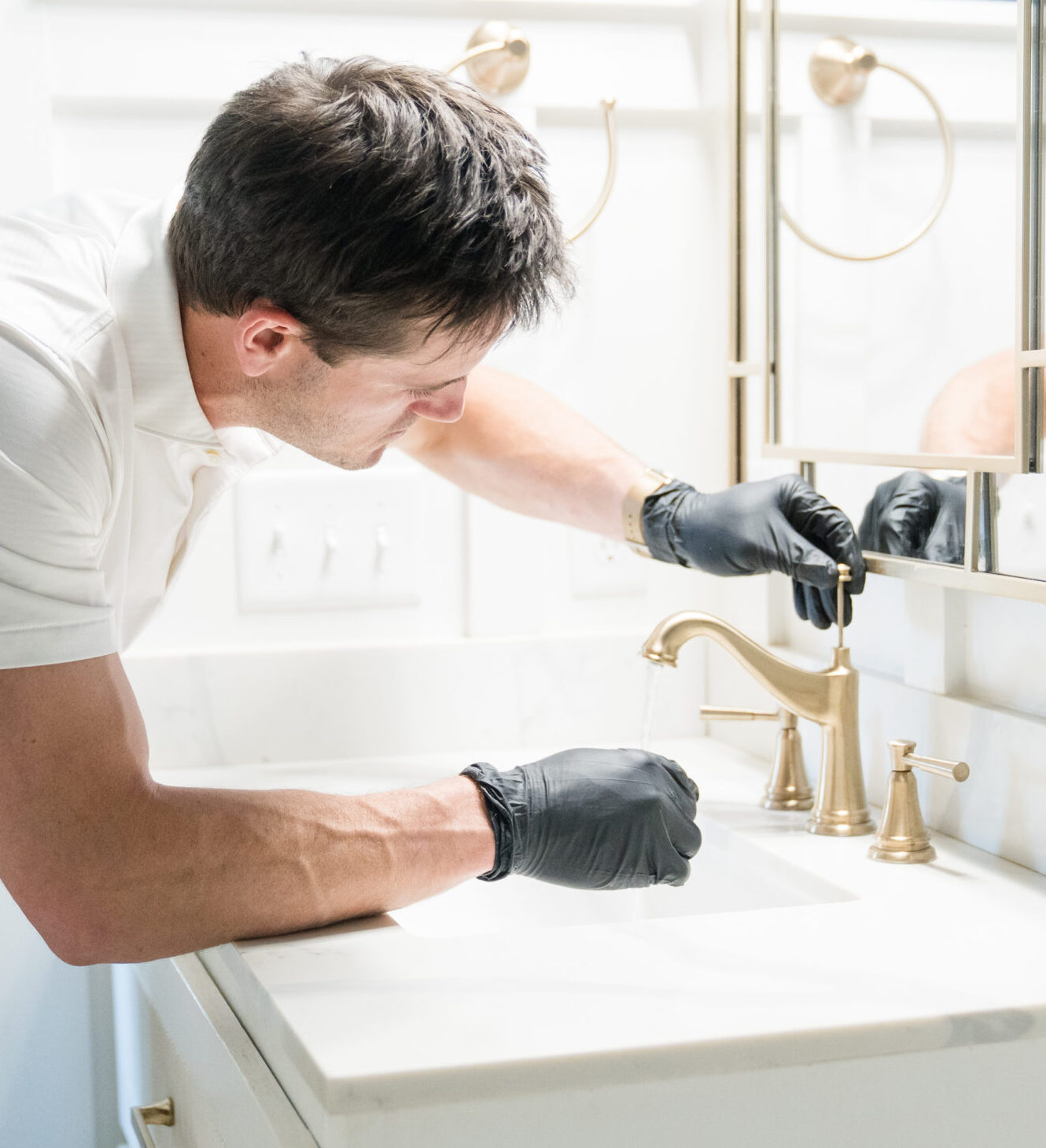

A dripping faucet is easy to live with, right up until you realize what it has been costing you. Faucet repair or replacement in Gaffney is one of those decisions that most homeowners put off because the problem seems small, a few drops a minute, a handle that sticks, a spray head that does not quite shut off all the way.
But a faucet that is not working correctly wastes water constantly, and in a home where every fixture connects to the same supply and the same water bill, those small problems add up faster than most people expect.
Gaffney sits at the heart of Cherokee County, where the housing stock includes everything from turn-of-the-century homes in the Residential Historic District to newer construction on the expanding edges of town. The plumbing in these homes covers a wide range of ages, materials, and conditions, and the faucets sitting on those kitchen sinks, bathroom vanities, and utility tubs are among the hardest-working and most frequently ignored fixtures in the house.
According to the U.S. Environmental Protection Agency, replacing old, inefficient faucets and aerators with WaterSense labeled models can save the average family 700 gallons of water per year, and a leaky faucet dripping at just one drip per second wastes more than 3,000 gallons annually.
Whether you are dealing with a faucet that drips, a handle that will not turn properly, or a fixture that is simply past its useful life, the decision between repair and replacement comes down to a few practical factors. This article walks through those factors so you can make the right call for your home, your budget, and your water bill.
In this article, you will learn about:
- How a failing faucet affects your water use and your wallet
- The signs that tell you a faucet needs attention right now
- When a repair makes sense and when replacement is the smarter investment
- What to know about choosing a replacement faucet for a Gaffney home
- Why professional installation matters more than most homeowners think
Keep reading to understand exactly when to fix what you have and when it is time to upgrade.
How a failing faucet costs you more than you think
A dripping kitchen faucet or a bathroom sink that will not fully shut off is not just annoying. It is an active waste of water and money that runs 24 hours a day, every day, until someone fixes it. Most homeowners underestimate the volume because the drip looks insignificant, but the math tells a different story.
The EPA’s WaterSense program reports that the average household’s leaks can account for more than 9,300 gallons of water wasted per year, and faucets are one of the three most common sources alongside toilets and showerheads. A single faucet dripping once per second wastes over 3,000 gallons in a year, which is enough water for more than 180 showers.
That waste shows up on your water bill every month, and it also puts unnecessary demand on your water heater if the hot-side valve is the one that is not sealing. Heating water that goes straight down the drain costs energy on top of the wasted water, which means a leaking hot-water faucet hits you twice, once on the water bill and again on the gas or electric bill.
Beyond the drip itself
A faucet that is not functioning correctly can signal problems beyond the fixture. Worn internal components can allow water to bypass the valve and seep into areas behind the sink or below the countertop. Over time, this moisture damages cabinet bases, warps countertops, and creates conditions for biological growth in spaces you cannot easily see.
A handle that requires excessive force to turn off may indicate mineral buildup inside the valve body, which is common in the Cherokee County area where the Piedmont geology contributes calcium and magnesium to the local water supply. That mineral accumulation does not just affect the faucet. It is also happening inside your supply lines, your water heater, and every other fixture in the house. Addressing the faucet is often the first step in recognizing and managing the broader effects of the local water chemistry.
A faucet with a deteriorating base seal can also allow water to seep underneath the fixture and run along the underside of the countertop into the cabinet below. This slow migration of water causes damage over weeks and months without any visible drip from the spout, making it one of the more insidious forms of hidden leak a Gaffney homeowner can face.
The signs that tell you a faucet needs attention right now
Not every faucet problem looks like a classic drip from the spout. Some symptoms are subtler, and waiting to address them usually makes the eventual repair more difficult or tips the balance from repair toward full replacement.
Persistent dripping after the handle is closed
This is the most recognizable faucet problem and the one most people tolerate the longest. A faucet that continues to drip after the handle is turned off has an internal seal or cartridge that is no longer creating a watertight closure. In most cases, the culprit is a worn washer, a degraded O-ring, or a cartridge that has reached the end of its service life.
The drip may start intermittently, only appearing when the handle is in a certain position, and progress to a constant flow over time. By the time the drip is constant, the internal damage is usually more advanced, and the repair may require replacing the entire cartridge or valve assembly rather than a single gasket.
Do not wait for a slow drip to become a steady stream. Addressing it early often means a simpler, less expensive repair.
Difficulty turning the handle
A handle that sticks, grinds, or requires excessive force to operate is telling you that the internal mechanism is compromised. The most common causes are mineral buildup inside the valve body, a corroded stem, or a cartridge that has seized due to deposits from the local water supply.
In Gaffney and the broader Cherokee County area, where the Piedmont bedrock contributes mineral content to the water, this type of wear is common and tends to accelerate in homes without a water softener. The calcium and magnesium in the water deposit on every internal surface the water contacts, and valve cartridges are especially vulnerable because water passes through them under pressure with every use.
A stiff handle is not just an inconvenience. It also increases the chance that the valve will not close fully, leading to a drip, or that the handle hardware will crack or strip under the extra force.
Reduced water flow or uneven spray
If the water flow from your faucet has decreased noticeably, or if the stream has become uneven or sprays sideways, the aerator may be clogged with mineral deposits or debris. This is a common issue in the Upstate and is usually a simple fix. Unscrewing the aerator from the end of the spout and cleaning or replacing it often restores full flow.
However, if cleaning the aerator does not solve the problem, the restriction may be inside the faucet body itself, in the supply lines behind the wall, or at the shut-off valves beneath the sink. Reduced flow at a single fixture is usually a localized issue. Reduced flow throughout the house points to something systemic, such as mineral buildup in the supply lines or a problem with the pressure regulation at the main.
Water pooling around the base
If water appears around the base of the faucet on the countertop or sink deck, the mounting hardware or the base gasket has lost its seal. This can happen as the gasket ages and hardens, as mounting nuts loosen from repeated handle operation, or as mineral deposits corrode the connection between the faucet body and the sink.
Base leaks are deceptive because the water often runs underneath the fixture and along the underside of the countertop before dripping into the cabinet below. By the time you notice moisture under the sink, the base leak may have been active for weeks. Check around the base of your faucets periodically by wiping the area dry and watching for moisture to return.
Visible corrosion or finish deterioration
A faucet with visible corrosion, pitting, or finish failure on its exterior surfaces has likely experienced the same deterioration on its internal components. While cosmetic wear does not always mean the faucet is leaking, it is a reliable indicator that the fixture is aging and that internal seals and cartridges may be nearing the end of their service life.
If the finish is flaking, green corrosion is visible on exposed brass or copper fittings, or the handles feel loose and worn, the faucet is telling you that a replacement is a better investment than a repair that may only buy a few more months.
When repair makes sense and when replacement is the smarter call
The repair-versus-replace decision is not one-size-fits-all. It depends on the age of the faucet, the nature of the problem, the availability of replacement parts, and how the cost of repair compares to the cost of a new fixture.
Repair is usually the right call when the faucet is relatively young
If the faucet is less than five to seven years old, is a quality brand, and the problem is a single component failure like a worn cartridge, a leaking O-ring, or a clogged aerator, repair almost always makes sense. The fixture still has years of useful life, the parts are readily available, and the cost of a cartridge replacement is a fraction of a new faucet plus installation.
Common faucet repairs include:
- Replacing a worn cartridge or valve seat to stop a drip
- Replacing O-rings or washers at the handle stems
- Cleaning or replacing a clogged aerator
- Tightening or replacing the base gasket to stop a deck leak
- Replacing a corroded supply line connection beneath the sink
A skilled plumber can handle most of these repairs in a single visit, and the parts cost for a cartridge or O-ring kit is typically minimal. If the faucet body itself is in good condition and the internal mechanism is the only issue, repair extends the life of the fixture without the expense of replacement.
Replacement makes more sense in these situations
There are clear scenarios where putting money into a repair is not a good investment:
- The faucet is more than 10 to 15 years old and has required multiple repairs. Older faucets have seals, cartridges, and valve bodies that are all aging together, and fixing one component often reveals that the next one is close to failing.
- Replacement parts are discontinued or difficult to source. Off-brand and builder-grade faucets installed during construction may not have readily available cartridges or trim kits, and the search for parts can cost more in time and labor than a new fixture.
- The faucet body is corroded, cracked, or damaged. No amount of internal repair can fix a compromised body. If the housing is deteriorating, replacement is the only lasting option.
- The current faucet is significantly less efficient than current models. Older faucets without aerators or with degraded flow restrictors can use 2.2 gallons per minute or more. According to the EPA, WaterSense labeled bathroom faucets use a maximum of 1.5 gallons per minute, reducing water use by 30 percent or more without sacrificing performance. If your faucets predate these efficiency standards, replacement pays for itself through lower water and energy bills.
- You are remodeling a kitchen or bathroom and the existing faucet does not match the updated design or functionality you want.
When two or more of these factors apply, replacement is almost always the better financial and practical decision.
Choosing a replacement faucet for your Gaffney home
If you have decided that replacement is the way to go, a few practical considerations will help you choose a faucet that works well in your home, lasts, and delivers the water efficiency gains that justify the upgrade.
Match the faucet to the sink configuration
Before shopping for style, check the number of holes in your sink or countertop. Kitchen sinks typically have one to four pre-drilled holes, and bathroom sinks usually have one or three. The faucet you choose must match the hole configuration unless you are willing to modify the sink deck, which adds cost and complexity.
Single-hole faucets are increasingly popular for both kitchens and bathrooms because they simplify installation and reduce potential leak points. If your sink has multiple holes, a deck plate or escutcheon can cover the unused openings for a clean appearance.
For kitchen faucets, consider whether you want a pull-down spray head, a separate side sprayer, or a fixed spout. Pull-down models combine the faucet and sprayer in one unit, eliminating the need for a separate sprayer hole and providing more flexibility at the sink.
Prioritize water efficiency
Look for the WaterSense label on bathroom faucets and aerators. WaterSense labeled products are independently certified to use at least 20 percent less water than standard models while maintaining performance. The EPA notes that if every home in the United States installed WaterSense labeled faucets and aerators, the country could save nearly 71 billion gallons of water and almost $1.6 billion in water and energy costs annually.
For kitchen faucets, which are not currently covered by the WaterSense labeling program, look for models with built-in flow restrictors or aerators that limit flow to 1.5 to 1.8 gallons per minute. This range provides plenty of flow for kitchen tasks while cutting water use significantly compared to unrestricted older models.
Even if you are not replacing the faucet itself, installing a WaterSense labeled aerator on an existing faucet is one of the fastest and least expensive water efficiency upgrades a homeowner can make. Most aerators cost a few dollars and screw on by hand.
Think about valve type and longevity
The internal valve mechanism determines how long a faucet will last and how it will feel to operate. Ceramic disc valves are the most durable option currently available. They use two ceramic plates that slide against each other to control flow, and they resist mineral buildup and wear far better than rubber washers or brass cartridges.
Most quality faucets from established manufacturers use ceramic disc technology, and these valves can last the lifetime of the faucet with normal use. If longevity is a priority, especially in a hard-water area like Cherokee County, a ceramic disc faucet is worth the slightly higher initial cost.
Compression faucets, which use a rubber washer pressed against a valve seat, are the oldest and most repair-prone design. They are found in many older Gaffney homes and are the type most likely to develop the classic drip-from-the-spout problem. Replacing a compression faucet with a ceramic disc model eliminates one of the most common recurring repair needs in residential plumbing.
Do not overlook the connections beneath the sink
A new faucet is only as reliable as the supply lines and shut-off valves that feed it. When replacing a faucet, it is the ideal time to inspect and, if necessary, replace the components underneath.
- Supply lines that are rigid chrome or corroded copper should be replaced with braided stainless steel flex connectors, which are more durable and easier to install.
- Shut-off valves that are stiff, corroded, or seep at the packing nut should be replaced during the faucet installation so the entire connection is fresh and reliable.
- If the drain assembly is showing signs of age, corrosion at the pop-up mechanism, a slow leak at the tailpiece, or a deteriorating basket strainer in the kitchen, replacing it at the same time avoids a second service call later.
A professional plumber assesses these components as part of a faucet installation and can address everything in one visit, which is more efficient and less expensive than returning to fix a supply line or valve that should have been caught the first time.
Why professional installation matters more than most homeowners expect
Faucet replacement looks straightforward on the surface. Remove the old one, connect the new one, turn on the water. In practice, the job involves working in tight spaces, dealing with corroded connections, ensuring proper sealing, and confirming that the supply system is compatible with the new fixture. The things that go wrong during a faucet installation are almost always below the sink, where the homeowner cannot see them until water damage appears.
The most common DIY faucet problems
Homeowners who install faucets themselves most commonly run into issues with supply line connections, particularly when old shut-off valves do not mate properly with new faucet connectors. Cross-threading a supply line fitting, over-tightening a compression nut, or failing to properly seat a ferrule can create a slow leak that drips into the cabinet for weeks before it is discovered.
Another frequent problem is inadequate sealing between the faucet base and the sink deck. If the gasket is not properly seated or the mounting hardware is not tightened evenly, water from normal use can wick underneath the faucet and run beneath the countertop. This type of leak is invisible from above and only becomes apparent when the cabinet below shows damage.
In older Gaffney homes, the existing plumbing underneath the sink may include galvanized steel supply lines, outdated gate valves, or non-standard connections that require adaptation during the installation. A professional plumber recognizes these situations immediately and has the parts and tools on hand to address them correctly.
What a professional installation includes
When you schedule a faucet installation with a licensed plumber, the service typically covers the full scope of the job:
- Removal of the old faucet, including disconnecting the supply lines, freeing corroded mounting hardware, and cleaning the sink deck.
- Inspection of the shut-off valves and supply lines, with replacement recommended if they are corroded, stiff, or leaking at the connections.
- Installation of the new faucet with proper gasket seating, correct mounting torque, and secure supply line connections.
- Connection to the drain assembly if a new pop-up or basket strainer is included.
- Testing with the water supply open, checking every connection for leaks and confirming proper hot and cold operation, flow rate, and handle function.
- Cleanup and a final check of the cabinet interior to confirm that no moisture is present at any connection point.
The entire process typically takes an hour or less for a standard single-faucet replacement, and the peace of mind that comes from knowing every connection has been tested under pressure is worth the cost of professional service.
Conclusion
Once your faucets are repaired or replaced, a few simple maintenance habits keep them performing well and extend their useful life.
Clean your aerators every few months by unscrewing them from the spout and rinsing away any accumulated mineral deposits or debris. If the deposits are heavy, soaking the aerator in white vinegar for an hour dissolves the mineral scale and restores full flow. This is especially important in the Cherokee County area, where the Piedmont water chemistry produces noticeable scale buildup over time.
Do not ignore a drip. A faucet that starts dripping will not stop on its own, and the longer it runs, the more water it wastes and the more damage it does to internal components. Addressing a drip early, whether through a cartridge replacement or a simple washer swap, costs far less than waiting for the faucet to fail completely.
Check under every sink monthly for any sign of moisture, staining, or a musty smell. A slow leak at a supply line, shut-off valve, or drain connection can run for weeks without being noticed from above. A quick glance inside the cabinet catches these problems before they cause real damage.
If your water pressure seems higher than normal, or if you hear pipes banging when fixtures shut off, have your pressure tested. The EPA recommends that most residential plumbing codes require a pressure-reducing valve when supply pressure exceeds 80 psi. Excessive pressure accelerates wear on every fixture and valve in the house, including your newly installed faucets.
Schedule a professional plumbing maintenance inspection at least once a year. A thorough inspection covers not only faucets but supply lines, shut-off valves, drain connections, and the water heater, catching the kind of developing problems that homeowners miss during routine use. For homes in Gaffney and Cherokee County, where the water chemistry and soil conditions create specific challenges for residential plumbing, annual professional attention is one of the most cost-effective ways to protect the system as a whole.
If any of your faucets are dripping, sticking, or past their useful life, or if you want a professional assessment of whether repair or replacement makes more sense for your situation, contact CB Smith Plumbing to schedule an appointment.
Serving Spartanburg, Greenville, and Cherokee Counties since 1982, CB Smith brings over 100 years of combined plumbing experience and handles everything from a single cartridge replacement to a full kitchen or bathroom faucet upgrade. Call (864) 574-4275 or reach out online to get started


