
Hiring a plumber in Spartanburg, SC is a decision that carries real financial and safety consequences. A licensed, experienced plumber protects your home from improper installations, code violations, and liability gaps; an unqualified one can leave you with failed inspections, voided insurance claims, and repair costs that exceed the original job. Most homeowners only discover the difference after something goes wrong.
In this article, you’ll learn what South Carolina licensing requirements actually mean for your hiring decision, which questions to ask before agreeing to any job, how to evaluate estimates without being misled by the lowest number, and what warning signs disqualify a contractor before work begins.
Here’s what you’ll find below.
- What South Carolina plumber licensing requires
- Questions to ask before hiring a plumber
- How to evaluate estimates and scope of work
- Red flags that disqualify a plumber before work begins
Keep reading to build a clear, practical framework for hiring a plumber who protects your home and your budget.
Hiring a plumber in Spartanburg, SC means verifying state licensing and insurance, evaluating technical competence for the specific job type, comparing written estimates, and confirming that the contractor operates in compliance with South Carolina plumbing code and permit requirements.
What South Carolina plumber licensing requires
South Carolina regulates plumbing contractors through the Department of Labor, Licensing and Regulation (LLR). Understanding what those licenses actually cover protects you from contractors who use vague or misleading credentials.
The difference between licensed and unlicensed
South Carolina issues several classes of plumbing licenses. A master plumber license is the highest residential and commercial credential, requiring a combination of supervised field experience, typically four years under a licensed master plumber, and passage of a state examination covering the South Carolina Plumbing Code. A journeyman license authorizes plumbing work under the supervision of a master plumber. An unlicensed handyman or general contractor may legally perform certain minor repairs in some jurisdictions, but they cannot pull permits for plumbing work in South Carolina. Any permitted work performed without a license creates a chain of liability that falls on the homeowner.
The license number on a plumber’s materials is verifiable through the SC LLR’s public lookup tool. Any reputable plumbing company should provide their license number before you ask for it.
Why permits matter for your home
Many plumbing jobs in South Carolina require a permit from the local building department before work begins. Jobs that commonly require permits include new water line installation, water heater replacement in most jurisdictions, drain line alterations, and any work that touches the supply or drain-waste-vent (DWV) system in a structural or rerouting capacity.
A permit triggers an inspection by a code official after the work is completed. That inspection confirms the job meets the South Carolina Plumbing Code, which is based on the International Plumbing Code (IPC) with state amendments. When a contractor skips the permit step to save time or money, the homeowner carries the risk. Unpermitted plumbing work can complicate home sales, void homeowners insurance claims related to that system, and force costly remediation if discovered during a future inspection.
Insurance requirements you should verify
A legitimate plumbing contractor operating in Spartanburg County should carry two types of insurance: general liability and workers’ compensation. General liability covers damage to your property caused by the contractor during the job. Workers’ compensation covers medical costs and lost wages if a worker is injured on your property.
Ask for certificates of insurance before any work begins, and verify that both policies are active and issued in amounts appropriate to the job scope. A contractor who declines to provide insurance documentation, or who claims to be exempt from workers’ comp because they work alone, presents an unacceptable liability risk. If a worker without coverage is injured on your property, you may be exposed to a claim under your homeowners insurance policy.
Questions to ask before hiring a plumber
Asking the right questions before hiring filters out underqualified contractors and establishes a clear performance baseline. These questions are direct, professional, and reasonable for any job.
Core qualification questions
What is your SC LLR license number, and is it current?
This is the first question. A licensed plumber Spartanburg residents should expect to hire will answer without hesitation. Take the number and verify it at the SC LLR website before signing anything.
Are you carrying general liability and workers’ compensation insurance?
Request the certificate of insurance, not just a verbal confirmation. Ask to be named as an additional insured on the general liability policy for larger jobs. This is standard practice and any reputable company will accommodate it.
Will you pull the required permits for this job?
If the answer is no and the job scope requires a permit, end the conversation. A contractor who avoids permits is either unaware of the code requirement, which reflects on their competence, or deliberately avoiding oversight, which reflects on their ethics.
How long have you been performing this type of work specifically?
General plumbing experience is not the same as specific experience. A plumber with 20 years of commercial work may have limited residential slab leak repair experience. Match the contractor’s background to the job type.
Job-specific questions
Before finalizing any plumber Spartanburg homeowners consider, ask questions tied directly to the scope of work:
- For water heater replacement: do you install both tank and tankless units, and which brands do you service?
- For drain line work: do you use camera inspection to confirm the diagnosis before recommending repairs?
- For slab leak repair: what detection method do you use, and will you provide a written report?
- For new construction or remodeling: are you familiar with Spartanburg County’s specific permit and inspection process?
- For water and sewer line work: do you perform trenchless repair, and under what conditions do you recommend open excavation instead?
The quality of a contractor’s answers to job-specific questions reveals their actual depth of knowledge more reliably than credentials alone.
References and past work
Request at least two references from jobs completed within the past 12 months that are comparable in scope to your project. Contact those references directly and ask three questions: Was the job completed on time? Did the final cost match the estimate? Would you hire this contractor again?
Online reviews provide useful signal, but they can be curated. Direct reference conversations are harder to manage and give you more candid information.
How to evaluate estimates and scope of work
A low estimate is not a good estimate. The number that matters is what you are getting for the price, and that determination requires a written scope of work, not just a dollar figure.
What a complete written estimate must include
A professional plumbing estimate for any job above minor repairs should include the following items:
- Scope of work: a plain-language description of every task to be performed, including any demolition, excavation, or restoration
- Materials: brand, model, and specification of all major components being installed
- Labor: the estimated hours for each phase, or at minimum a clear statement of whether pricing is flat-rate or time-and-materials
- Permit fees: whether permits are included in the price or billed separately
- Timeline: a start date and estimated completion date or duration
- Payment schedule: deposit amount, progress payments if applicable, and final payment terms
- Warranty: separate statements for parts warranty (manufacturer) and labor warranty (contractor)
An estimate that consists only of a line item total with no scope description is not a basis for a contract. Do not sign or pay a deposit against it.
Comparing multiple estimates accurately
When you receive estimates from multiple plumbing companies Spartanburg homeowners might consider, comparison only works if the scope is identical. A $1,400 estimate and a $2,100 estimate for a water heater replacement may reflect different equipment grades, different permit handling, or different warranty terms rather than a difference in contractor quality.
Ask each contractor to confirm in writing that their estimate includes permit fees, haul-away of the old unit, and the same equipment specification. Once the scope is normalized, price differences reflect labor rate and overhead, which are legitimate variables in the market.
Understanding flat-rate versus time-and-materials pricing
Flat-rate pricing gives you a fixed cost for a defined scope regardless of how long the job takes. It favors the homeowner when the job is straightforward and protects against billing surprises. Time-and-materials pricing bills you for actual hours and parts. It can be more cost-effective for complex diagnostic or exploratory jobs where the full scope isn’t known at the outset, but it transfers cost risk to you.
For standard residential jobs, flat-rate pricing is appropriate and should be the default expectation. For residential drain line cleaning where the blockage cause is unknown, or for leak detection investigations, time-and-materials with a defined hourly cap is a reasonable compromise.
Red flags that disqualify a plumber before work begins
Certain contractor behaviors are not negotiable warning signs. Each one below should end the hiring conversation.
Pressure tactics and cash-only demands
Demanding a large upfront cash deposit
A deposit of 10 to 30 percent on larger jobs is standard and acceptable. A demand for more than 50 percent upfront, especially in cash, is a red flag. It shifts financial leverage entirely to the contractor before any work is performed and limits your recourse if the job is abandoned or completed poorly.
Pressuring you to decide immediately
Legitimate contractors do not manufacture urgency for standard residential jobs. Statements like “this price is only good today” or “I can start right now but I need a check first” are sales tactics, not operational realities. A reputable plumbing company Spartanburg residents trust gives you time to review an estimate, check credentials, and make an informed decision.
Quoting over the phone without seeing the job
For anything beyond a simple faucet replacement or toilet flap repair, a professional plumber should assess the job in person before quoting. A phone quote on a complex repair is either a placeholder number that will change once they arrive, or a sign that the contractor is guessing.
Credential and documentation red flags
Watch for these disqualifying behaviors before or during the hiring process:
- Refuses to provide a license number or provides a number that doesn’t verify through SC LLR
- Cannot produce a current certificate of insurance on request
- Proposes to skip permits on work that requires them
- Provides a verbal-only estimate with no written documentation
- Has no physical business address listed, only a phone number or social media profile
- Subcontracts the job to an unlicensed third party without disclosing this upfront
According to the U.S. Bureau of Labor Statistics, plumbers are among the most regulated trades in the construction sector, with formal apprenticeship and licensing requirements in every state. A contractor who operates outside that framework is not a cost-saving alternative; they are an unmanaged risk.
Conclusion
Hiring the right plumber in Spartanburg, SC comes down to verifiable credentials, clear written documentation, and honest communication before the first tool is picked up. License verification, insurance confirmation, permit compliance, and a complete written estimate are not optional extras for cautious homeowners. They are the baseline for any professional plumbing relationship.
The warning signs covered in this guide, pressure tactics, missing credentials, verbal-only estimates, permit avoidance, are not rare. They appear regularly in the residential market, and they predict poor outcomes reliably. The few minutes spent verifying a license number and requesting a certificate of insurance are among the highest-return steps a homeowner can take before approving any plumbing job.
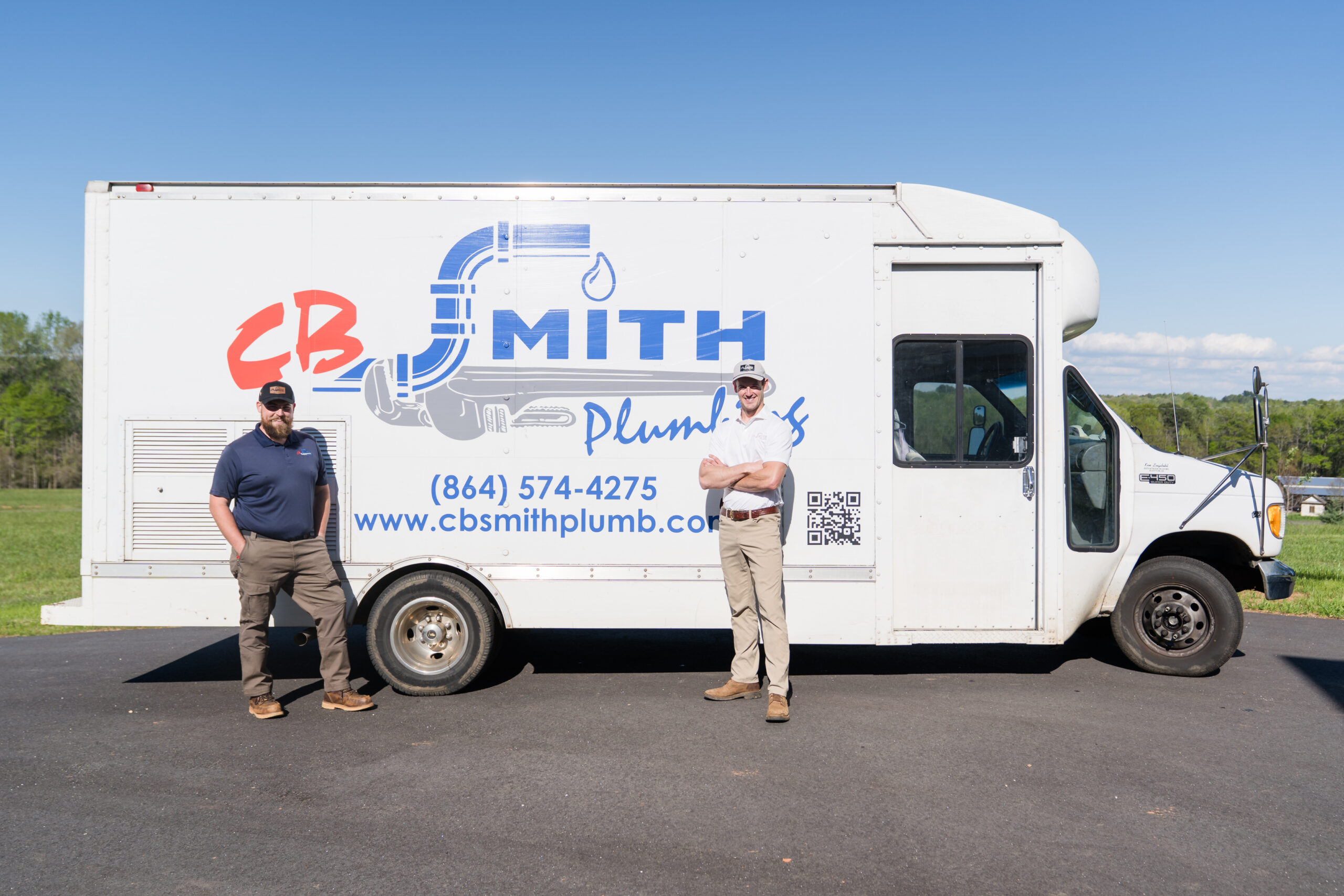
CB Smith Plumbing has operated in Spartanburg County since 1982 under a master plumber license, with full insurance, permit compliance, and written estimates as standard practice on every job. If you’re ready to hire a plumbing contractor you can verify and trust, contact CB Smith Plumbing to request an estimate.