
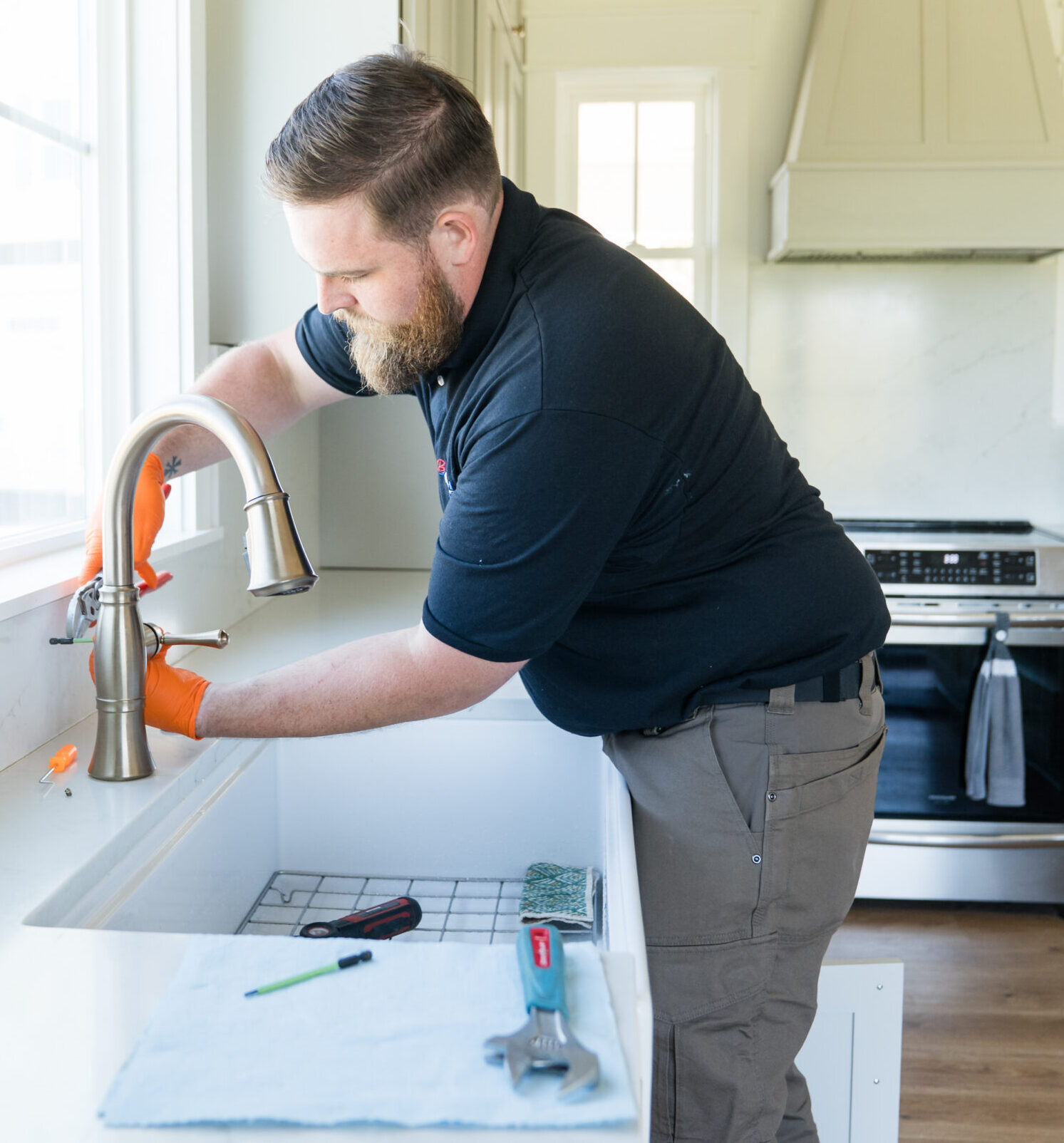
A remodel is the best opportunity you will ever have to fix what is behind the walls. Once the drywall comes down and the subfloor is exposed, every pipe, connection, valve, and drain line in the project area is accessible for the first and possibly only time in decades.
Remodel plumbing ideas in Mayo deserve serious attention because this small Spartanburg County community has a housing stock that spans from original textile mill-era homes built in the early twentieth century to mid-century ranch houses and newer construction on the expanding edges of the area. The plumbing inside many of these homes has never been updated, and a kitchen or bathroom renovation is the moment to change that.
Most homeowners focus their remodel budget on the surfaces they can see: countertops, tile, cabinets, fixtures. Those choices matter, but the plumbing behind and beneath those surfaces determines whether the room actually works well for the next 20 years.
According to the U.S. Environmental Protection Agency, replacing old, inefficient faucets and aerators with WaterSense labeled models can save the average family 700 gallons of water per year, and upgrading to a WaterSense labeled showerhead can save another 2,700 gallons annually. Those savings compound over the life of the fixtures, and they start the day the remodel is finished.
This article covers the plumbing decisions that make the biggest difference during a Mayo home remodel, explains why each one matters in the context of the Upstate’s water and soil conditions, and walks through the upgrades that add real function and value versus the ones that are not worth the investment.
In this article, you will learn about:
- Why a remodel is the right time to address what is behind the walls
- The supply line and drain upgrades that pay for themselves
- Bathroom remodel plumbing ideas that improve daily life
- Kitchen plumbing upgrades worth the investment
- How to work with a plumber to get the most out of your remodel budget
Keep reading to make sure your next renovation improves the plumbing as much as the appearance.
Why a remodel is the right time to address what is behind the walls
The biggest expense in most plumbing repairs is not the parts or the labor on the plumbing itself. It is the cost of getting to the pipes. Opening walls, removing tile, pulling up flooring, and then putting it all back together after the plumbing work is done can easily double or triple the total cost of a repair that would have been straightforward if the surfaces had already been removed.
During a remodel, that access is free. The walls are already open. The flooring is already pulled. The fixtures are already disconnected. Every pipe, valve, and connection in the project area is exposed and accessible, which means any plumbing work done during the remodel costs a fraction of what the same work would cost as a standalone project later.
This is why experienced plumbers and contractors recommend addressing the plumbing infrastructure during a remodel, not just the visible fixtures. Replacing a 40-year-old galvanized supply line while the wall is open costs a few hundred dollars in materials and labor. Replacing the same line three years later, after the new tile and drywall are installed, costs that same amount plus the cost of demolition and restoration of the finished surfaces.
What Mayo homes commonly need behind the walls
Mayo’s housing stock includes a significant number of homes built during and after the textile mill era, with many properties dating from the mid-twentieth century. Homes of this age commonly have plumbing characteristics that are worth addressing during any renovation:
- Galvanized steel supply lines, which corrode from the inside and restrict water flow over time. If your Mayo home was built before the 1970s and still has the original supply piping, the interior diameter may be significantly reduced by decades of mineral buildup and corrosion. A remodel is the ideal time to repipe the affected sections with modern PEX or copper.
- Cast iron or older PVC drain lines with deteriorating joints. Drain connections inside walls can develop slow leaks at joints that have shifted over time, particularly in the Piedmont clay soil that underlies Spartanburg County. Replacing compromised drain sections during the remodel prevents the kind of hidden moisture damage that undermines the new finishes you just paid for.
- Undersized supply lines that cannot support the flow demands of modern fixtures. Older homes were often plumbed with supply lines sized for the fixtures of their era, and adding a high-flow shower system or a modern kitchen faucet to an undersized supply line produces disappointing water pressure regardless of how good the new fixture is.
- Shut-off valves that are corroded, seized, or unreliable. Every fixture should have a functioning shut-off valve that allows you to isolate the water supply for that fixture without shutting off the entire house. Old gate valves commonly found in Mayo-era homes seize in the open position after years of disuse. Replacing them with modern quarter-turn ball valves during the remodel ensures you can shut off any fixture quickly in an emergency.
Supply line and drain upgrades that pay for themselves
Not every plumbing upgrade has the same return. Some improvements pay for themselves through lower water bills, reduced maintenance, and avoided future repairs. Others are nice to have but do not move the needle on value or function. The upgrades below consistently deliver the strongest return for Mayo homeowners.
Replace aging supply lines in the project area
If the remodel exposes galvanized steel, polybutylene, or aging copper supply lines, replacing them with PEX or new copper is one of the highest-value plumbing decisions you can make. The cost is modest when the walls are already open, and the benefit is immediate: better water pressure, cleaner water, fewer future leak risks, and the elimination of the internal corrosion that restricts flow and contributes to water quality problems.
PEX has become the standard for residential supply lines because it resists corrosion, tolerates the Upstate’s moderate mineral content without scaling the way metal pipes do, and flexes enough to accommodate the thermal expansion and ground movement that the Piedmont clay soil produces over time. It is also faster and less expensive to install than copper, which keeps labor costs lower during the remodel.
If the remodel only opens part of the house, prioritize replacing the supply lines in the rooms being renovated and plan to address the remaining sections during future projects. A partial upgrade still eliminates the weakest links in the system and reduces the risk of a supply line failure in the newly finished space.
Upgrade the drain lines and connections
Drain lines inside walls are invisible and easy to forget, but they are just as important as the supply side. During the remodel, have the exposed drain connections inspected for corrosion, joint separation, improper slope, and any signs of previous leaking. A drain line that has been seeping at a joint for years may have caused hidden damage to framing or subfloor material that the remodel gives you the opportunity to identify and repair.
If the home has cast iron drain lines, which are common in older Mayo properties, check for thinning walls, pitting, and joint deterioration. Cast iron lasts a long time, but in the Upstate’s humid climate, the exterior surfaces corrode as well as the interior, and joints that were packed with lead and oakum decades ago can lose their seal as the materials degrade.
Replacing compromised drain sections with PVC during the remodel is straightforward and inexpensive when the walls and floors are already opened. Waiting until a failed drain joint leaks onto your new tile floor is not.
Add or replace shut-off valves at every fixture
Every sink, toilet, dishwasher, washing machine, and water heater should have its own dedicated shut-off valve. If any of the valves in the remodel area are gate valves, corroded compression valves, or valves that do not turn smoothly, replace them with quarter-turn ball valves.
This is a small investment that pays off enormously the first time you need to isolate a fixture for a repair. A functioning shut-off valve lets you stop water to a single sink or toilet without affecting the rest of the house. A seized or missing valve means shutting off the main supply, which disrupts the entire household for what should be a localized repair.
Bathroom remodel plumbing ideas that improve daily life
Bathrooms are the most common remodel target in residential homes, and they are also the rooms where plumbing decisions have the most direct impact on daily comfort and water efficiency. The choices you make during a bathroom remodel affect every shower, every flush, and every time someone washes their hands for years to come.
Upgrade the shower valve and showerhead
If the existing shower has a single-handle valve with no pressure-balancing or thermostatic protection, a remodel is the time to upgrade. A pressure-balancing valve prevents dangerous temperature spikes when someone flushes a toilet or runs water elsewhere in the house while someone is in the shower. A thermostatic valve goes further by maintaining a precise set temperature regardless of changes in supply pressure.
The EPA estimates that replacing a standard 2.5-gallon-per-minute showerhead with a WaterSense labeled model saves the average family 2,700 gallons of water per year and more than 330 kilowatt hours of electricity from reduced water heating demand. A WaterSense showerhead uses no more than 2.0 gallons per minute and is independently certified to deliver spray coverage and intensity equal to or better than conventional models.
Pairing a modern valve with an efficient showerhead during the remodel gives you a shower that is safer, more comfortable, and less expensive to operate than what it replaced.
Install water-efficient toilets
If the bathroom remodel includes replacing the toilet, choose a WaterSense labeled model that uses 1.28 gallons per flush or less. According to the EPA, the average family can save 13,000 gallons of water per year by replacing old, inefficient toilets with WaterSense labeled models, and the savings on water and wastewater bills can reach nearly $2,400 over the lifetime of the toilets.
Older homes in Mayo may still have toilets that use 3.5 to 5 gallons per flush, which is two to four times the water used by a modern efficient model. The performance of current WaterSense toilets is excellent, and dual-flush models give you the option of a lower-volume flush for liquid waste.
Upgrade the vanity plumbing
When a bathroom vanity is replaced, the plumbing behind it is fully accessible. This is the time to:
- Replace supply lines with braided stainless steel flex connectors
- Install new quarter-turn shut-off valves
- Replace the drain assembly, including the pop-up mechanism and the P-trap
- Inspect the drain line inside the wall for any signs of deterioration or improper venting
- Install a WaterSense labeled faucet with a ceramic disc valve for long-term durability
These components are inexpensive individually, but replacing them all at once during the remodel ensures the entire connection beneath the new vanity is fresh, reliable, and matched to the new fixture. A new vanity sitting on top of corroded supply valves and a deteriorating drain trap is a renovation that looks finished but is not.
Consider adding a second bathroom or half bath
In homes where only one bathroom serves the entire household, adding a half bath during a remodel is one of the most impactful upgrades for both daily function and resale value. A half bath requires a toilet and a sink, which means a supply line connection, a drain connection, and a vent tie-in. The complexity depends on the proximity to existing drain and supply lines, but a skilled plumber can often route the connections during a larger remodel or renovation project without major structural changes.
If adding a full bathroom is within scope, the plumbing requirements increase to include a shower or tub drain, a shower valve connection, and potentially a larger drain line to handle the additional volume. This level of work is most cost-effective when it is planned as part of the overall remodel rather than added as an afterthought.
Kitchen plumbing upgrades worth the investment
Kitchen remodels are the second most common renovation project, and they present similar opportunities to upgrade the plumbing behind the scenes while the surfaces are already removed.
Upgrade the kitchen faucet and supply connections
A kitchen faucet handles more daily use than any other fixture in the house. If the existing faucet is more than 10 years old, replacing it during the remodel with a modern model that includes a pull-down spray head, ceramic disc valve, and an efficient aerator improves both function and water efficiency.
While the faucet is disconnected, replace the supply lines and shut-off valves underneath. Kitchen supply connections are subject to grease exposure, heat from the dishwasher, and the vibration of garbage disposal operation. Older connections are more likely to develop slow leaks in this environment than in a bathroom, and replacing them during the remodel eliminates that risk.
Relocate or add a dishwasher connection
If your kitchen remodel changes the layout, the dishwasher connection may need to move. This is straightforward when the walls and floor are open, but it requires proper drain routing to prevent backflow. The dishwasher drain should loop high under the countertop or connect through an air gap to prevent wastewater from the sink drain from backing into the dishwasher during use.
If you are adding a dishwasher to a kitchen that did not previously have one, the remodel is the time to run the supply line, the drain connection, and the electrical circuit. Trying to add these connections after the remodel is finished means opening up the work you just completed.
Install a point-of-use hot water recirculation system
One of the most practical kitchen plumbing upgrades is a hot water recirculation system. In many homes, the kitchen is far from the water heater, which means you run the faucet for 30 seconds to two minutes before hot water arrives. That waiting period wastes one to three gallons of water per use, and it adds up to hundreds of gallons per year.
A recirculation system, installed during the remodel when the supply lines are accessible, delivers hot water to the kitchen faucet almost immediately by keeping a slow flow of hot water circulating through a dedicated return line or by using a bypass valve at the furthest fixture. The water savings and the daily convenience are noticeable from the first day.
Address the drain line condition
Kitchen drain lines accumulate grease, food debris, and soap residue more aggressively than bathroom drains, and a line that has been in service for decades may be significantly restricted even if it still drains. During the remodel, have the exposed drain lines cleaned or replaced, and confirm that the slope is correct and that the venting is intact.
If the kitchen remodel moves the sink to a different location, the drain routing must follow the new layout, which requires proper slope, an appropriate trap, and a vent connection. Improper drain installation during a kitchen remodel is one of the most common causes of slow drains, gurgling, and odor problems in newly renovated kitchens.
How to work with a plumber to get the most out of your remodel budget
The plumbing portion of a remodel works best when the plumber is involved early, before the final layout is locked and before demolition begins. A plumber who sees the project in the planning stage can identify opportunities and constraints that affect the layout, flag existing conditions that need to be addressed, and help you prioritize where to spend the plumbing budget for the greatest impact.
Bring the plumber in during the planning phase
Before the first wall comes down, a licensed plumber can assess the existing plumbing infrastructure in the remodel area and provide recommendations based on what is there. This visit typically covers:
- The condition of existing supply lines, drain lines, and vent connections
- Whether the current pipe sizing can support the planned fixtures and layout
- Any code requirements that apply to the proposed work, including permits
- The feasibility and cost of relocating supply or drain connections for a new layout
- Recommendations for upgrades that are most cost-effective to do now while the walls are open
This information shapes the remodel plan in ways that save money and prevent surprises during construction. Discovering a deteriorated drain line or an undersized supply after the tile is ordered and the cabinets are built creates delays, change orders, and budget overruns that a pre-demolition assessment would have prevented.
Prioritize the work you cannot do later
If the remodel budget is limited, prioritize the plumbing work that can only be done efficiently while the walls and floors are open. Supply line replacement, drain line repair, vent corrections, and shut-off valve upgrades are all dramatically cheaper during the remodel than they will be afterward.
Fixtures, faucets, and appliances can always be upgraded later without opening walls. The plumbing behind the walls cannot. Allocate your budget accordingly, and choose the best infrastructure you can afford even if it means selecting a slightly less expensive faucet or showerhead to keep the project on budget. The faucet is easy to swap in two years. The supply line behind the tile is not.
Plan for inspections and permits
Any remodel that involves moving, adding, or modifying plumbing supply lines, drain lines, or vent stacks typically requires a permit and an inspection by the local building authority. Your plumber should handle the permit application and coordinate the inspection timing with the general contractor’s schedule.
Permit requirements protect you as the homeowner by ensuring that the plumbing work meets code and passes an independent review. Skipping the permit to save time or money creates a liability that can surface during a future sale, an insurance claim, or a subsequent repair when a later plumber discovers unpermitted work behind the walls.
Schedule the 11-month check
After the remodel is complete, schedule a follow-up plumbing inspection approximately one year later. This visit confirms that all connections are holding, that the drain lines are flowing correctly, that no slow leaks have developed behind the new finishes, and that the fixtures are performing as expected. If the remodel included a contractor warranty, this inspection also documents the condition of the plumbing before the warranty period expires.
The Upstate’s Piedmont water chemistry begins affecting new fixtures and connections from the first day of use. An annual check catches any early mineral buildup, connection loosening, or settling-related drain changes before they produce visible damage.
Conclusion
A remodel is one of the largest investments a homeowner makes, and the plumbing decisions within that project determine whether the renovation holds up for 5 years or 25. The visible surfaces get the attention, but the pipes, valves, and connections behind them do the actual work.
In Mayo, where many homes carry plumbing that has been in service for decades and the local water supply delivers a steady mineral load from the Piedmont geology, a remodel that ignores the infrastructure behind the walls is a missed opportunity.
The access is there. The cost of doing the work now is a fraction of what it will be later. And the improvement in daily function, water efficiency, and long-term reliability is something you will notice every time you turn on a faucet, flush a toilet, or step into the shower.
If you are planning a kitchen or bathroom remodel in Mayo, or if you want a professional assessment of the plumbing behind your walls before the project begins, contact CB Smith Plumbing. Serving Spartanburg, Greenville, and Cherokee Counties since 1982, CB Smith handles everything from pre-remodel plumbing assessments to full remodeling and new construction plumbing installation.
With over 100 years of combined plumbing experience on the team, they know what Mayo homes look like behind the drywall and how to make your renovation investment last. Call (864) 574-4275 or reach out online to start the conversation before the first wall comes down.
