
Your shower runs every day, often more than once, and it involves every major component of your plumbing system at the same time: supply lines delivering hot and cold water under pressure, a mixing valve controlling temperature, a showerhead distributing flow, and a drain carrying wastewater out.
That daily cycle of pressurized water, heat, and drainage puts constant wear on the connections, seals, and surfaces inside the assembly. Shower plumbing maintenance in Greenville is one of the most effective ways to prevent the leaks, clogs, and fixture failures that turn a routine morning into an emergency call.
Greenville sits in the heart of the Upstate, where the local water supply draws from protected reservoirs in the Blue Ridge foothills and carries a moderate mineral load through the Piedmont geology before it reaches your home.
That mineral content affects every fixture it touches, and showers take the brunt of it because they combine high water volume with heat, which accelerates mineral deposition on every internal surface. Homes across Greenville, from historic neighborhoods near downtown to newer suburban developments, share this water chemistry, and the effects show up in showerheads, valves, drains, and supply connections regardless of the age of the house.
The good news is that most shower plumbing problems are preventable with straightforward maintenance habits and periodic professional attention. This article covers the specific maintenance tasks that keep your shower running efficiently, explains why each one matters in the Greenville area, and identifies the warning signs that mean it is time to call a plumber.
In this article, you will learn about:
- Why shower plumbing wears out faster than most homeowners expect
- The showerhead and valve maintenance that prevents the most common failures
- How to keep your shower drain clear and avoid backups
- What Greenville’s water chemistry does to your shower over time
- When to handle maintenance yourself and when to call a professional
Keep reading to stay ahead of the problems that cost the most to fix when they are caught late.
Why shower plumbing wears out faster than most homeowners expect
Showers experience a combination of stresses that no other fixture in the house matches. Every use involves rapid temperature changes as hot and cold water mix inside the valve, sustained water pressure against seals and connections for the duration of the shower, and a transition from full flow to shutoff that creates pressure spikes in the supply lines. Over months and years, these forces wear on every component in the assembly.
The volume of water is significant too. According to the U.S. Environmental Protection Agency, showering accounts for nearly 17 percent of residential indoor water use, and the average American shower uses approximately 2.5 gallons per minute with a standard showerhead. A typical eight-minute shower moves 20 gallons of water through the valve, the showerhead, and the drain. Multiply that by two or three showers a day in a household, and the annual volume flowing through your shower plumbing is substantial.
That volume carries mineral content, and in Greenville, where the water originates from Table Rock Reservoir, North Saluda Reservoir, and Lake Keowee in the Blue Ridge foothills, dissolved calcium and magnesium travel through the distribution system and into your home. The Greenville Water system treats the supply to meet all federal and state standards, but the moderate mineral hardness common in the Upstate is enough to deposit scale on internal surfaces over time.
Heat makes the deposition worse. When water is heated, dissolved minerals precipitate out of solution more readily, which is why the hot-water side of every fixture in the house accumulates scale faster than the cold side. Your shower, which runs hot water at high volume through a narrow valve and a perforated showerhead, is the ideal environment for mineral buildup.
What happens when maintenance is skipped
A shower that is never maintained does not fail all at once. It degrades incrementally. The showerhead gradually clogs with scale, reducing flow and creating uneven spray patterns. The cartridge inside the mixing valve stiffens as mineral deposits accumulate on the sealing surfaces, making temperature adjustment less precise and eventually causing the valve to leak. The drain collects hair, soap residue, and body oils that coat the pipe walls and narrow the opening until water backs up during every use.
Each of these problems starts small and gets worse over time. By the stage where a homeowner notices reduced water pressure, inconsistent temperature, or standing water in the tub, the underlying wear is usually more advanced than a single quick fix can address. Regular plumbing maintenance breaks this cycle by catching wear early, when it is inexpensive to correct, rather than late, when it requires component replacement or professional repair.
Showerhead and valve maintenance that prevents the most common failures
The showerhead and the mixing valve are the two components that determine how your shower performs, and they are also the two most affected by Greenville’s water chemistry. Maintaining them is straightforward, and the payoff in performance and longevity is significant.
Cleaning and descaling the showerhead
Mineral scale is the number one cause of reduced shower performance. As calcium and magnesium deposits build up inside the showerhead’s nozzle openings, the spray pattern becomes uneven, some nozzles stop flowing entirely, and the overall flow rate drops. You may compensate by turning the valve wider open, which increases water use without actually restoring proper spray coverage.
Cleaning the showerhead every three to four months prevents this cycle and keeps flow consistent. The process is simple:
- Unscrew the showerhead from the shower arm. Most detach by hand or with a gentle turn from an adjustable wrench. Use a cloth between the wrench and the finish to avoid scratching.
- Soak the showerhead in white vinegar for one to two hours. The acetic acid dissolves calcium and magnesium deposits without damaging the finish or internal components.
- Use a small brush or a toothpick to clear any remaining deposits from individual nozzle openings.
- Rinse the showerhead thoroughly and reattach it to the shower arm. Apply a wrap of plumber’s tape to the threads before reattaching to ensure a watertight seal.
If the showerhead is too encrusted to clean effectively, or if the internal flow restrictor is damaged, replacement is the better option. This is also a good opportunity to upgrade to a WaterSense labeled model. The EPA estimates that the average family can save 2,700 gallons of water per year by replacing a standard 2.5-gallon-per-minute showerhead with a WaterSense labeled model that uses no more than 2.0 gallons per minute, and the energy savings from heating less water can amount to over 330 kilowatt hours annually.
Maintaining the shower valve and cartridge
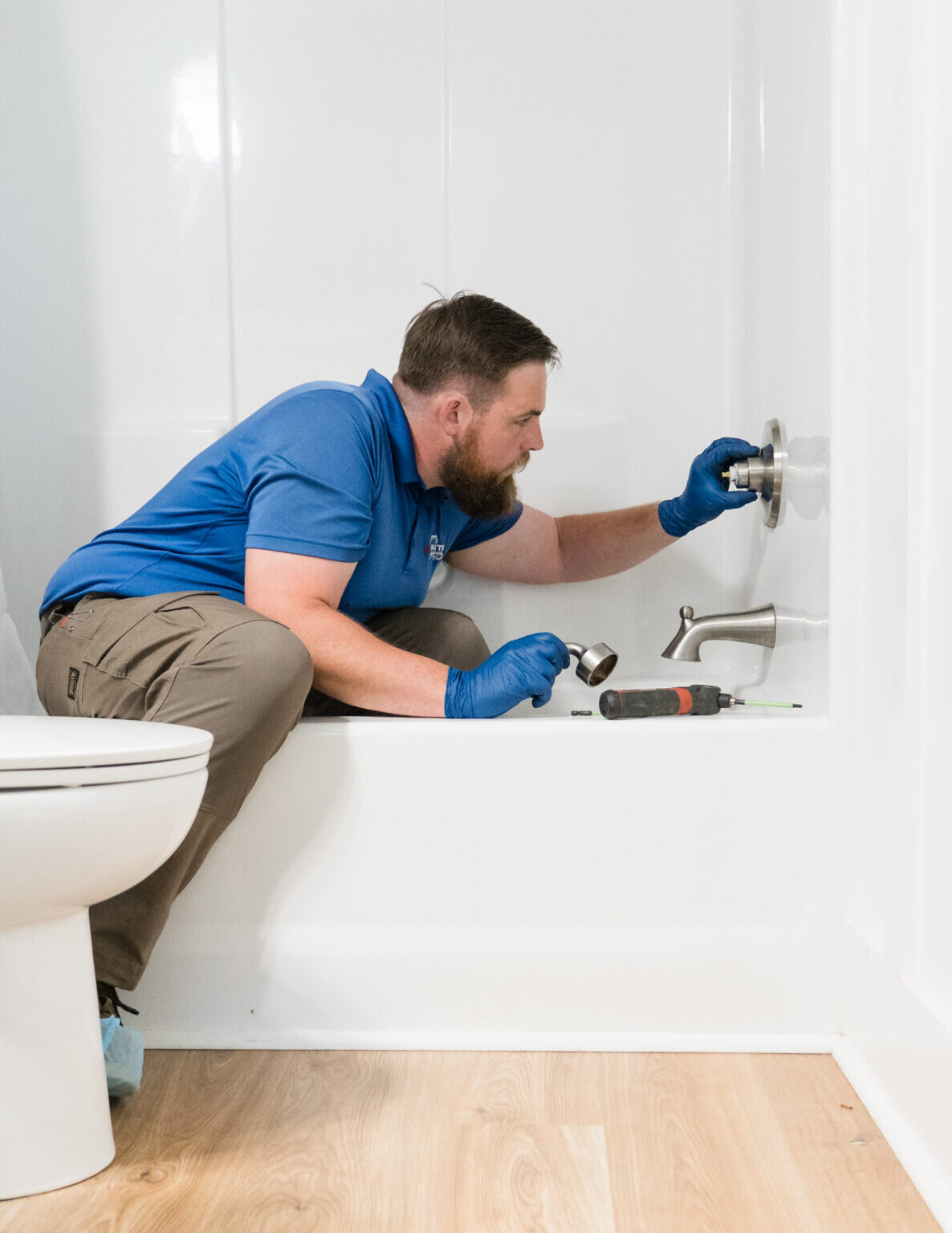
The mixing valve inside the wall controls the blend of hot and cold water and the overall flow. It contains a cartridge, which is the internal mechanism that opens, closes, and mixes the water supply based on handle position. Over time, the seals inside the cartridge wear, the internal surfaces accumulate mineral deposits, and the cartridge begins to underperform.
Signs that the shower valve or cartridge needs attention include:
- Difficulty adjusting the handle, which sticks, grinds, or requires unusual force
- Temperature fluctuations during the shower that were not present when the valve was newer
- A drip from the showerhead that continues after the handle is fully closed
- Water seeping from around the handle escutcheon or trim plate
A dripping shower valve wastes water around the clock. Even a slow drip adds up to hundreds of gallons per month, and because shower valves typically mix hot water, the waste includes energy as well. According to the EPA, fixing easily corrected household leaks can save homeowners roughly 10 percent on their water bills.
Cartridge replacement is a repair that a professional plumber can handle in a single visit, and it restores the valve to like-new operation without replacing the entire valve body or the surrounding tile work. If your shower valve is more than 10 to 15 years old and showing multiple symptoms, a complete valve replacement may be more cost-effective than repeated cartridge swaps, and it provides an opportunity to upgrade to a pressure-balancing or thermostatic valve that prevents dangerous temperature spikes when other fixtures in the house are used simultaneously.
Inspecting the shower arm and supply connections
The shower arm is the short pipe that extends from the wall and connects to the showerhead. It threads into a fitting inside the wall, and that connection can loosen over time from the vibration of daily use, from thermal expansion and contraction, or from the torque applied when showerheads are swapped.
A loose shower arm connection allows water to seep behind the wall, where it saturates framing, insulation, and drywall without any visible sign from inside the shower. Over time, this hidden moisture produces the kind of damage that requires opening the wall to repair, a far more expensive job than tightening or resealing the arm.
Check the shower arm periodically by gently gripping it and testing for play. If it moves or wobbles, the connection behind the wall may need attention. If you notice moisture on the wall surface around the arm, staining on the ceiling below a second-floor shower, or a musty smell near the shower, schedule a professional leak inspection promptly.
How to keep your shower drain clear and functioning
Shower drains handle a daily load of hair, soap residue, body oils, shaving debris, and shampoo buildup. All of this material passes through the drain cover, enters the trap, and flows into the branch drain line that connects to the rest of the home’s drain system. Without regular attention, the accumulation narrows the drain and eventually produces the standing water and slow drainage that most homeowners recognize as a clog.
Prevention is easier than clearing
The simplest and most effective step is installing a mesh drain strainer or hair catcher over the drain opening. These inexpensive accessories catch the majority of hair and larger debris before it enters the drain, and they can be cleaned in seconds after each shower.
Beyond the strainer, a few habits keep the drain clear between professional cleanings:
- Once a week, remove the drain cover and pull out any visible hair or debris from the top of the drain. This takes less than a minute and prevents the kind of accumulation that leads to slow drainage.
- Every month, flush the shower drain with a pot of boiling water to help dissolve soap scum and body oil residue that coats the pipe walls. Follow the hot water with a half cup of baking soda, then a cup of white vinegar. Let the mixture fizz for 15 minutes, then flush with another pot of hot water.
- Never pour chemical drain cleaners down a shower drain. They are corrosive to pipe materials, especially in older homes with cast iron or aging PVC, and they rarely reach the full length of a developing clog. The chemicals may temporarily open a small channel through the blockage, but the underlying buildup remains and continues to accumulate.
When the drain needs professional cleaning
If the shower drains slowly despite regular strainer use and home flushing, or if water pools in the tub or shower pan during normal use, the blockage has moved beyond what surface-level maintenance can reach. A professional drain cleaning uses mechanical cable equipment or hydro jetting to clear the full length of the drain line and remove the accumulated material that home methods cannot access.
Signs that professional cleaning is overdue include:
- Standing water that does not drain during a shower
- A foul odor rising from the drain even when it is not actively in use
- Gurgling sounds from the drain when the toilet is flushed or when another fixture in the bathroom is running
- Recurring clogs that return within days or weeks of home clearing attempts
Recurring clogs in a shower drain can also indicate a problem further down the line. If the branch drain connecting the shower to the main drain line has a partial obstruction, root intrusion, or a bellied section where water and debris pool, no amount of showerhead-side maintenance will solve the problem permanently. A camera inspection of the drain line identifies the root cause and allows the plumber to recommend the right fix.
What Greenville’s water chemistry does to your shower over time
Greenville’s water supply originates from some of the cleanest source water in the Southeast, drawn from protected reservoirs in the Blue Ridge foothills. The Greenville Water system treats this supply through filtration and chloramine disinfection to meet all EPA and South Carolina standards. However, the moderate mineral content present in the Upstate’s water still affects residential plumbing over time, and showers bear a disproportionate share of the impact because of how they use water.
Mineral scale on fixtures and inside valves
The calcium and magnesium in Greenville’s water supply deposit on every surface the water contacts, and the rate of deposition increases with temperature. Inside a shower valve, where hot water flows under pressure through narrow passages, scale builds on the cartridge surfaces, the valve seat, and the internal walls of the valve body.
This buildup gradually changes how the valve operates. The handle becomes stiffer, temperature control becomes less precise, and the sealing surfaces lose their ability to create a watertight closure. Regular descaling, either through home cleaning of accessible components or through professional cartridge service, prevents this progression and extends the life of the valve.
On visible surfaces, mineral scale appears as white or chalky deposits on the showerhead, around the handle trim, and on glass shower doors or tile grout lines. These deposits are cosmetic on surfaces you can clean, but they indicate the same process happening inside the components you cannot see.
Chloramine effects on rubber and plastic seals
Greenville Water uses chloramine, a combination of chlorine and ammonia, as its primary disinfectant. Chloramine is more stable than free chlorine, which means it maintains disinfection throughout the distribution system, but it also means it reaches your fixtures at a higher residual concentration. Over time, chloramine degrades rubber gaskets, O-rings, and certain plastic components inside valves and showerhead assemblies faster than chlorine alone would.
This degradation is gradual, but it explains why shower valves in chloramine-treated water systems may need cartridge replacement sooner than manufacturer estimates suggest. If your shower valve is leaking around the handle or dripping from the spout despite a cartridge that is not very old, chloramine degradation of the internal seals is a likely contributor.
How hard water interacts with soap and grains
Hard water reduces the effectiveness of soap and shampoo, requiring more product to achieve the same lather. The mineral content reacts with soap to form a sticky residue that clings to skin, hair, shower surfaces, and drain walls. This soap scum is harder to rinse off than residue from soft water, which is why Greenville homeowners often notice film on glass doors, dull-looking tile, and a slippery coating inside the tub or shower pan.
Inside the drain, this soap scum combines with hair and body oils to form the dense, adhesive buildup that causes the majority of shower drain clogs. Homes with harder water or homes without a water softener tend to experience drain buildup faster and may benefit from more frequent professional drain cleaning to stay ahead of blockages.
When to handle maintenance yourself and when to call a professional
Most shower maintenance falls into the category of simple, regular tasks that any homeowner can handle. Cleaning the showerhead, pulling hair from the drain, flushing the drain with hot water and vinegar, and checking for visible leaks around the valve trim and the shower arm are all quick, no-tool tasks that prevent the most common problems.
What you can safely do at home
A basic shower maintenance routine takes minutes and costs almost nothing:
- Clean or soak the showerhead in vinegar every three to four months to remove mineral scale
- Clear hair and debris from the drain cover after every shower, or at least weekly
- Flush the drain with hot water, baking soda, and vinegar once a month
- Wipe down the shower arm connection and handle trim periodically and check for moisture or movement
- Test the shower valve by turning it fully off and watching the showerhead for drips. If water continues, the cartridge or seals need attention.
- Replace the showerhead every five to eight years, or sooner if cleaning no longer restores full flow. Upgrading to a WaterSense labeled model saves water and energy with no loss of spray performance.
These habits form the foundation of shower maintenance and prevent the majority of problems that lead to professional service calls.
When a professional should handle it
Call a licensed plumber when you encounter any of the following:
- The shower valve drips continuously after the handle is fully closed, which indicates a worn cartridge or valve seat that requires disassembly of the valve body inside the wall
- Temperature swings or sudden loss of hot or cold water during use, which may indicate a failing cartridge, a cross-connection issue, or a problem with the water heater supply
- Water appearing on the wall outside the shower, on the ceiling below a second-floor bathroom, or in the crawl space beneath a ground-floor shower. These signs point to a leak inside the wall that requires professional leak detection and repair.
- Low water pressure isolated to the shower when other fixtures in the house flow normally. This can indicate mineral blockage inside the valve body, a partially closed supply valve, or a deteriorating supply line behind the wall.
- Standing water that does not respond to home clearing methods, or recurring clogs in the shower drain that suggest an obstruction deeper in the drain system
- Any work that requires opening the wall, modifying supply lines, or replacing the valve body. Shower valves are typically recessed inside the wall framing, and accessing them requires careful work to avoid damaging surrounding tile, drywall, or waterproofing.
The value of including the shower in your annual plumbing inspection
An annual professional plumbing inspection covers the entire system, but the shower deserves specific attention because of how heavily it is used and how much of its plumbing is hidden inside the wall. A trained plumber checks the valve operation, inspects accessible supply connections, evaluates drain flow, and looks for early signs of moisture behind the wall that home inspections would miss.
According to the U.S. Department of Energy, water heating accounts for roughly 13 percent of annual residential energy use. A shower system that leaks, runs inefficiently, or forces the water heater to work harder than necessary contributes directly to higher utility costs. Catching these issues during a routine inspection keeps both your water bill and your energy bill where they should be.
For Greenville homeowners, where the combination of mineral content, chloramine treatment, and high daily water volume through the shower creates an environment that accelerates wear, annual professional attention is not an extra. It is a practical investment that extends the life of your fixtures and prevents the kind of hidden damage that gets expensive fast.
Conclusion
The showers in your home are used every day, and the plumbing behind them works under pressure, heat, and chemical exposure that most fixtures never experience. The homes that avoid the most expensive shower-related repairs are the ones where somebody is paying attention to the small things: a showerhead that sprays unevenly, a handle that feels stiffer than it used to, a drain that takes a few extra seconds to clear.
Tie your shower maintenance to something you already do. When you clean the bathroom, spend 30 extra seconds checking the drain for buildup and feeling the shower arm for looseness. When you descale the coffee maker, soak the showerhead in the same vinegar. When you schedule your annual plumbing inspection, ask the plumber to pay specific attention to the shower valve, the supply connections, and the drain line.
These small habits prevent the problems that lead to water damage behind walls, mold growth in hidden spaces, and emergency repair calls that cost many times what routine maintenance would have. Your shower is a system, not just a fixture, and maintaining it like one keeps it working the way it should for years.
If your shower is showing signs of trouble, if the valve drips, the drain runs slow, the pressure has dropped, or you have noticed moisture where it should not be, schedule an appointment with CB Smith Plumbing.
Serving Spartanburg, Greenville, and Cherokee Counties since 1982, CB Smith brings over 100 years of combined plumbing experience and handles everything from a showerhead swap to a full valve replacement behind the wall. Call (864) 574-4275 or contact the team online to keep your shower running right.