
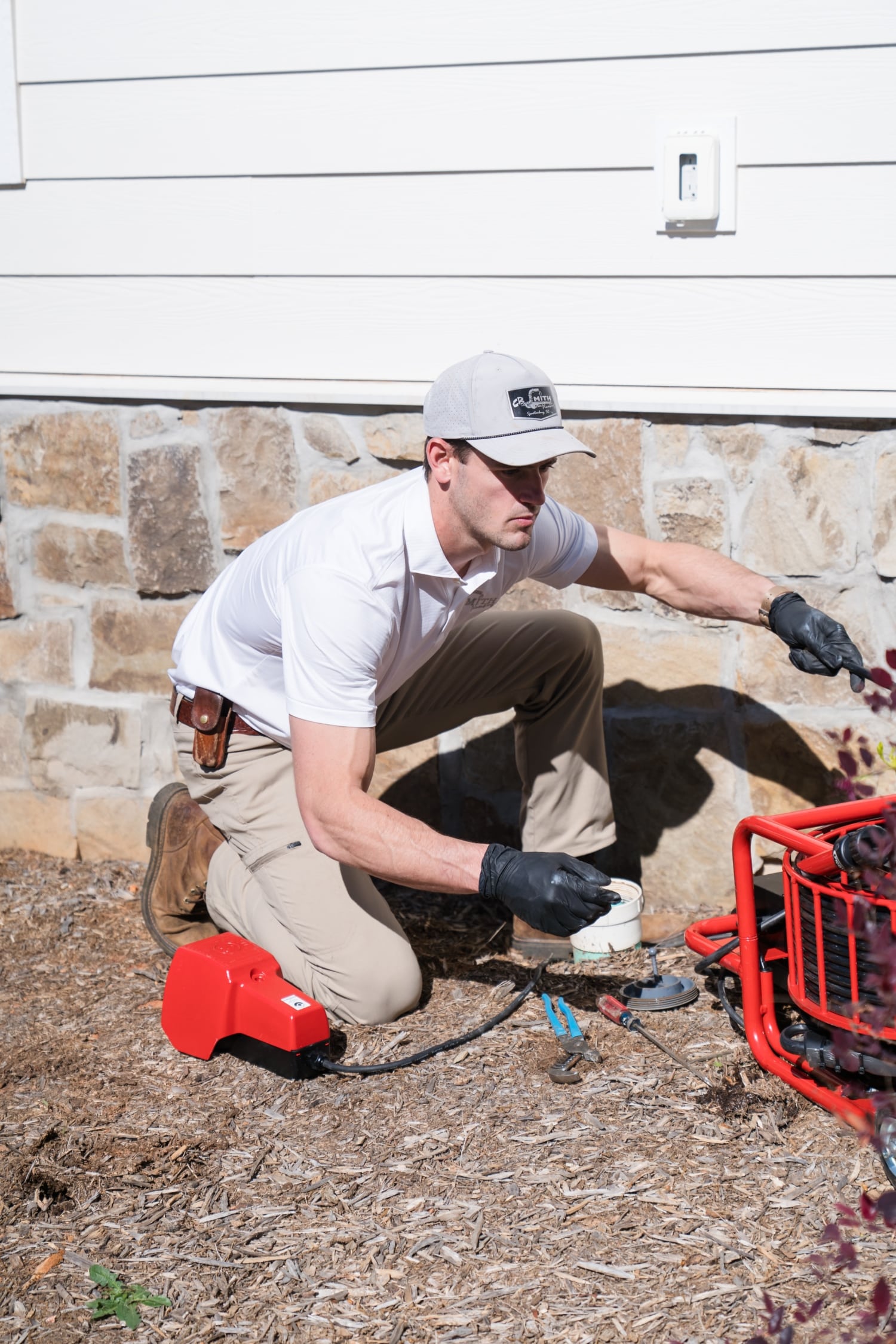

Sewer line maintenance benefits in Greer are the kind of thing most homeowners only discover after they have gone without them long enough to need an expensive repair. The sewer line runs from the house to the municipal connection at the street, buried underground, completely invisible, and completely out of mind until something backs up into a first-floor drain at the worst possible moment. That invisibility is exactly what makes regular maintenance so easy to defer and so costly to defer too long.
According to the EPA’s assessment of aging wastewater infrastructure, the United States loses billions of gallons of wastewater annually through small cracks and joint failures in deteriorating sewer systems, and the same dynamic plays out at the property level. Small defects grow into large ones, and large defects become emergencies. The difference between those two outcomes is almost always whether the line was being maintained.
CB Smith Plumbing has been serving Greer and Spartanburg County since 1982. The team clears sewer lines, runs camera inspections, and handles excavation work throughout the Upstate.
The calls the team receives for emergency sewer work follow a consistent pattern: warning signs that had been present for months, dismissed as minor inconveniences, until the line backed up completely. This article is about why that pattern happens, what it costs when it does, and what regular maintenance prevents.
In this article, you will learn about:
- What actually happens inside a sewer line when maintenance is skipped
- The real cost difference between maintenance and emergency repair
- How camera inspection and hydro jetting work together to protect the line
- Tree root intrusion and why Greer homeowners face more of it than they think
- The right maintenance schedule for your home and what to ask a plumber
Keep reading to understand what a properly maintained sewer line buys you and what a neglected one eventually costs.
What actually happens inside a neglected sewer line
Most homeowners picture a sewer line failure as a sudden event, a pipe that breaks or collapses without warning. The reality is almost always a slower process: years of accumulation, gradual narrowing, and progressive deterioration that produces a series of warning signs before it produces a backup. The backup feels sudden because nothing was done about the signs that came first.
A neglected sewer line does not sit still. It degrades on a timeline that is influenced by the material it is made of, the age of the home, the trees in the yard, what goes down the drains, and how often the line is cleaned. In Greer and the broader Upstate region, older homes often have clay or cast iron pipe that faces specific failure patterns. Newer construction typically uses PVC, which is more resistant to root intrusion and corrosion but can still fail at joints if the initial installation had grade or compaction issues.
Grease, debris, and the slow narrowing no one sees
Every drain in the home contributes to the sewer line. Kitchen grease, soap scum, hair, food particles, toilet paper, and wipes that should not have been flushed all move through the same pipe toward the municipal connection. They do not all make it through cleanly. Fats and grease that enter the drain as liquids cool as they travel through the pipe and begin adhering to the pipe wall. Each successive contribution adds another layer. Over months, that buildup narrows the effective interior diameter of the line.
A pipe operating at 80 percent of its original capacity handles normal household flow without drama. At 60 percent it starts backing up under heavy use. At 40 percent a single long shower can produce a slow drain in the tub or a backup in the floor drain. None of those stages produces a visible crisis, which is why they are so often ignored. The narrowing is invisible, the symptoms are easy to rationalize, and by the time the backup is undeniable, the line has usually been in the danger zone for a long time.
Waste habits that accelerate sewer line buildup include:
- Pouring cooking fats and oils down the kitchen sink rather than disposing of them in the trash
- Flushing wipes, even those labeled flushable, which do not break down like toilet paper
- Allowing starchy foods, coffee grounds, and fibrous vegetable scraps into drain lines through the garbage disposal
- Using chemical drain cleaners repeatedly, which corrode older pipe materials while only partially clearing the clog
Professional cleaning removes the accumulated material from the pipe wall entirely, restoring the full interior diameter rather than simply puncturing the center of a blockage the way a household snake does. The difference between those two approaches is the difference between a line that is genuinely clear and a line that is temporarily flowing.
Pipe age and what it means for a Greer home
EPA infrastructure data identifies that approximately 40 percent of U.S. homes over 50 years old have sewer laterals classified as high-risk and requiring inspection. Greer has a substantial housing stock from the 1950s through the 1980s, and those homes are now well past that threshold. The pipe materials installed in that era, clay tile, cast iron, and in some cases Orangeburg pipe (a fiber and tar composition that was phased out by the 1970s), have failure characteristics that are worth understanding.
Clay tile pipe was the dominant sewer lateral material for residential construction through most of the mid-twentieth century. It is not inherently fragile, but it is installed in sections with mortar joints, and those joints are the vulnerability. Over decades of soil movement, freeze-thaw cycles, and root pressure, the mortar between sections can crack or separate. Roots find those openings immediately. Cast iron corrodes from the inside as hydrogen sulfide gas produced by sewage reacts with the iron pipe wall, eventually weakening the wall to the point of perforation or collapse.
Neither of those failure modes announces itself dramatically. They develop gradually, and the early stages are detectable only with camera inspection. A homeowner in a 1960s Greer home who has never had the sewer lateral inspected is operating without any current picture of what that pipe looks like, which is a significant blind spot in the home’s maintenance record.
The compounding problem: roots find every crack
Tree root intrusion is the single most common cause of sewer lateral failure in the Upstate, and it is the failure mode that catches the most homeowners completely by surprise. Roots do not wait for a pipe to be in poor condition before entering it. They detect the moisture and nutrients that sewer lines emit and actively seek the smallest available opening, including hairline cracks at pipe joints, minor separations from soil movement, and mortar gaps in clay tile sections.
Once a root enters a pipe, it does not stay small. It grows toward the nutrients it found, branching and expanding inside the pipe diameter. A root that entered through a small joint crack five years ago may now occupy a third of the pipe interior, collecting debris on every strand and accelerating the buildup that was already occurring. By the time it produces a backup, it has been growing in the line for years.
The challenge for Greer homeowners is that the area’s mature tree cover, combined with the region’s clay-rich soils that hold moisture near root level, creates exactly the conditions that encourage aggressive lateral root spread. Root intrusion is not a problem exclusive to homes with old trees directly above the sewer line. Roots from trees 20 or 30 feet away can travel laterally to reach a sewer line’s moisture signature.
The real cost difference between maintenance and emergency
The financial argument for sewer line maintenance is clear when the costs are placed side by side, but most homeowners never see that comparison until they are already paying the emergency side of it. Understanding what routine maintenance actually prevents is the most persuasive case for scheduling it before something fails.
A routine hydro jetting and camera inspection for a typical residential sewer lateral in Spartanburg County runs a fraction of what emergency sewer work costs. The cost difference is not marginal. It is the difference between a planned service visit and an excavation project that tears up a yard or driveway.
Maintenance costs versus emergency repair: a real comparison
Routine sewer maintenance, which includes a camera inspection to document the line’s condition followed by hydro jetting to remove accumulated buildup, is a predictable expense that fits into any home maintenance budget. It produces a clear outcome: a line that is cleaned to the pipe wall, inspected for any developing structural issues, and documented for the homeowner’s records.
Emergency sewer repair after a complete backup is a different financial event entirely. It begins with the same diagnostic inspection, but now the plumber is working against a system that is not functional rather than one that is being maintained. If the inspection reveals root intrusion that has been developing for years, or a pipe section that has collapsed or separated, excavation becomes part of the repair scope. Excavation through a yard costs significantly more than the inspection and cleaning that would have identified the developing problem at a stage when it could have been addressed without digging.
The cost categories that routine maintenance eliminates or reduces include:
- Emergency service call premiums for work done outside business hours or on weekends
- Excavation costs for repairs that could have been caught at an early, accessible stage
- Interior cleanup and remediation if a backup reaches living spaces
- Landscaping or hardscape restoration after emergency excavation work
- Potential foundation or crawl space damage if a sewer backup reaches those areas
A sewer line repair that is caught during a routine camera inspection and addressed at a minor stage is a dramatically different financial and logistical event than the same problem discovered after a complete failure. That gap, between the maintenance cost and the emergency repair cost, is what preventive sewer service buys.
The insurance gap most homeowners discover too late
Most standard homeowner’s insurance policies treat sewer lateral failures as a maintenance issue rather than a covered loss. The practical effect is that the full cost of sewer excavation and repair, which can easily reach several thousand dollars for a straightforward replacement and significantly more for a complex one, falls entirely on the homeowner when a lateral fails.
Some insurers offer optional sewer service line endorsements that cover a portion of underground pipe repair costs. These riders are relatively inexpensive and worth reviewing with an insurance agent, but they do not change the underlying situation: the more proactive maintenance a homeowner performs, the less likely they are to face a failure event that triggers that coverage need in the first place.
The financial picture reinforces what the physical one already shows. Regular maintenance is not an extra cost layered on top of homeownership. It is a direct reduction in the probability of a larger, uninsured expense occurring when the line eventually reaches the failure point that deferred maintenance guarantees.
Camera inspection: seeing the line before it tells you
A camera inspection is what separates informed sewer line maintenance from guesswork. Without it, a homeowner has no current picture of what their lateral looks like, what material it is made of, how much buildup has accumulated, whether root intrusion is present, and whether any structural issues are developing. With it, every maintenance decision is grounded in what the pipe actually looks like rather than what the homeowner hopes it looks like.
CB Smith Plumbing runs camera inspections as a standard part of sewer maintenance service in Greer. The findings are not always dramatic, but they are always useful, and occasionally they reveal a condition that would have produced an expensive emergency within months if not caught at that visit.
What the camera actually finds
A sewer camera is a small, waterproof camera mounted on a flexible cable that moves through the pipe from a cleanout access point. It transmits live video to a screen the plumber monitors in real time, and the footage is typically recorded so the homeowner can see exactly what was found.
What shows up on that footage varies considerably by home age, pipe material, and maintenance history. In a well-maintained line, the inspection typically confirms clear pipe walls, intact joints, and no signs of root intrusion or structural deterioration. In a line that has never been inspected, it is not unusual to find a combination of buildup on the pipe walls, some degree of root intrusion at joint locations, and occasionally a pipe section that has shifted or partially collapsed due to soil settlement.
Conditions the camera identifies that are not detectable any other way include:
- Root intrusion at joint locations, from hairline entry points to established root masses
- Grease and debris buildup thick enough to significantly restrict the pipe diameter
- Pipe offset or bellying, where a section has shifted out of alignment and creates a low spot that accumulates solids
- Cracking or perforation in the pipe wall from corrosion or physical stress
- Joint separation that indicates soil movement or structural settling around the pipe
Each of those findings changes what the right response is. Root intrusion caught early responds to hydro jetting and possibly a root inhibitor treatment. Root intrusion that has been growing for years in a pipe with compromised walls is a different conversation, potentially requiring excavation or pipe replacement rather than a simple cleaning. Knowing which situation you are in before the line fails is what makes the inspection worth scheduling.
Reading the footage with a plumber
The inspection footage is most valuable when reviewed with the plumber rather than just described to the homeowner afterward. Seeing the actual condition of the pipe, including where buildup is heaviest, where roots have entered, and what the joint condition looks like, gives a homeowner a concrete basis for making maintenance and repair decisions. It also creates a documented baseline that makes the next inspection more useful, since comparing footage from two inspections over a multi-year interval shows whether conditions are stable or progressing.
Greer homeowners who have a camera inspection done for the first time are often surprised by what they see, not always because the pipe is in crisis, but because the visibility is so different from what they had imagined. A line they thought was fine turns out to have significant root activity at three joints. A line they expected to be in poor condition turns out to be clean and structurally sound. Either way, the information is better than the assumption.
Hydro jetting and what it does that snaking cannot
Drain snaking and hydro jetting are both used to address sewer line blockages, but they are not interchangeable. Understanding the difference matters because the choice between them has real implications for how long the cleaned condition lasts.
A drain snake is a flexible cable with a cutting head that physically breaks through a clog or cuts through roots that are blocking the pipe. It is fast, effective for acute blockages, and the right tool for a lot of situations. But it addresses the center of the blockage rather than the pipe wall. After snaking, the pipe flows again, but the buildup coating the pipe wall is still there, and roots that were cut off at the pipe interior rather than extracted will grow back faster than the original intrusion developed.
How hydro jetting clears the full pipe wall
Hydro jetting uses high-pressure water delivered through a specialized nozzle that directs jets forward and radially outward against the pipe wall as it moves through the line. The pressure strips accumulated grease, soap scum, scale, and debris from the pipe wall, not just the center of the flow path. The result is a pipe that is restored close to its original interior diameter rather than simply opened enough for water to pass.
For lines with root intrusion, hydro jetting cuts through root masses with significantly more thoroughness than a mechanical snake and flushes the cut material out of the line. It does not prevent roots from regrowing into a pipe with cracked or open joints, but it resets the clock on how much interior space the roots occupy and buys meaningful time before the intrusion reaches a critical level again.
Situations where hydro jetting is the more appropriate choice than snaking alone include:
- Lines with recurring blockages that return within weeks or months of being snaked
- Kitchen drain laterals with significant grease accumulation from years of heavy cooking use
- Lines where camera inspection has confirmed buildup coating the pipe wall rather than a single discrete clog
- Main sewer laterals in homes with mature trees where root intrusion is confirmed or likely
After hydro jetting, a follow-up camera inspection confirms the line has been cleared to the wall and documents the current condition for the homeowner’s maintenance record. That documented post-cleaning picture is the most useful baseline a homeowner can have for planning the next maintenance interval.
Scheduling maintenance around your home’s risk profile
Not every Greer home needs sewer maintenance on the same schedule. A newer home with PVC lateral, no large trees within 30 feet of the sewer line, and careful drain habits may be well served by an inspection every two to three years. An older home with clay pipe, mature oaks or other deep-rooted trees in the yard, and a history of recurring slow drains should be on an annual schedule.
The most useful way to determine the right interval for a specific home is to have a camera inspection done and let the findings guide the recommendation. A plumber who can see what the pipe looks like now can give a much more accurate estimate of how quickly conditions are likely to change than any generic guideline can. That inspection-driven schedule is more cost-effective than either inspecting too frequently for a low-risk home or waiting too long for a high-risk one.
The signs that maintenance is overdue
For Greer homeowners who have not had their sewer lateral inspected or cleaned recently, certain conditions in the home’s plumbing behavior are reliable indicators that the line is under stress and that maintenance should not wait any longer.
These signs do not always mean the line is on the verge of failure. They mean the line is telling you something, and that the right response is to find out what rather than to dismiss the signal.
What the drains are trying to tell you
Slow drains and gurgling sounds are the two most consistent early warning signs of a sewer line that needs attention. A single slow drain is usually a localized fixture issue, a clogged P-trap or hair buildup close to the drain opening. Multiple slow drains running at the same time, or a drain that backs up when another fixture is used, points to a restriction in the main lateral rather than an individual fixture line.
Gurgling sounds, particularly from a toilet or floor drain when another fixture is running, indicate that air is being pushed back through the line by a partial blockage downstream. The water moving through the partially blocked line displaces air, which travels backward through the path of least resistance and exits at the lowest available drain opening. That sound is the line communicating that flow is being restricted somewhere in the lateral.
Behavioral signs that suggest the sewer lateral needs service include:
- Two or more drains running slowly at the same time, without a single obvious fixture cause
- A gurgling or bubbling sound from a toilet, tub, or floor drain when the washing machine drains or another heavy-flow fixture runs
- Sewage odor near floor drains or in the lowest level of the home without a clear single source
- A toilet that drains sluggishly or requires multiple flushes more often than it did a year ago
- Water backing up into the tub or shower when the toilet is flushed
Any of these, particularly if more than one is present at the same time, is a reason to schedule a drain camera inspection promptly. A line showing multiple symptoms simultaneously is past the stage where any of them should be rationalized as minor.
After a blockage is cleared, the real work begins
A sewer line that has backed up once is more likely to back up again than one that has never backed up. A first backup almost always indicates that the conditions producing it, buildup, root intrusion, or a structural issue, have been developing for long enough that they are not resolved by clearing the immediate blockage. The line flows again after the acute blockage is addressed, but the underlying conditions remain unless they are specifically investigated and addressed.
The best response to a first sewer backup is not simply to clear it and go back to normal. It is to clear it, inspect the line with a camera to understand what produced the backup, and make a maintenance plan based on what the inspection reveals. Homeowners who do that after a first backup consistently have longer intervals before any subsequent event. Homeowners who clear the backup and defer the inspection often find themselves calling again within a year.
CB Smith Plumbing serves Greer, Cowpens, Inman, Lyman, Roebuck, and throughout Spartanburg County. The team brings the camera equipment and jetting capability to give every Greer homeowner a complete picture of their lateral’s condition and a clear maintenance recommendation based on what the inspection actually shows.
Making sewer maintenance part of the annual routine
The homeowners who avoid expensive sewer emergencies over the long term are almost never the ones who got lucky. They are the ones who built sewer maintenance into their annual home maintenance calendar and had a professional assessment of the lateral’s condition before a problem developed to the point of forcing one.
That kind of consistency does not require constant vigilance. It requires scheduling a camera inspection on a cycle that matches the home’s risk profile and following through on the cleaning and minor repairs that the inspection identifies.
Building a maintenance calendar that actually holds
Annual maintenance calendars work when they are built around natural reminder points rather than abstract scheduling commitments. Tying sewer line maintenance to a consistent time of year, fall is a particularly practical choice in the Upstate because it follows the summer growth season when root activity is highest and precedes the colder months when a backup is most disruptive, turns it from a good intention into a habit.
A complete annual sewer maintenance visit for a Greer home with moderate risk typically includes:
- Camera inspection of the full lateral from cleanout access to the municipal connection
- Hydro jetting to clear accumulated buildup from the pipe wall
- A verbal and written summary of what the camera found, including any conditions worth monitoring
- A recommendation on the next inspection interval based on the current line condition
That visit, done once a year or every other year depending on the home’s risk profile, is what keeps a Greer homeowner out of the emergency repair scenario that no one plans for and everyone would prefer to avoid.
What a well-maintained sewer line actually buys
A sewer line that is regularly inspected and cleaned is not just less likely to back up. It is a documented asset. When a home with a maintained sewer lateral goes to market, the maintenance record is a concrete differentiator. Buyers who have seen the camera footage from the last inspection and know the line was cleaned on a consistent schedule have meaningful confidence in a component of the home they cannot easily evaluate any other way.
The residential plumbing maintenance approach that produces the best long-term outcomes is one built on documentation and consistency rather than reactive intervention. Greer homeowners who want to start that kind of program, or who want to have their lateral inspected for the first time, can schedule directly with CB Smith Plumbing through the contact page or by phone. For homeowners also managing a broader set of plumbing concerns, combining a sewer inspection with a whole-home plumbing assessment makes the visit as productive as possible.
Conclusion
Sewer line maintenance benefits in Greer are not complicated to understand once the alternative is visible. A neglected line accumulates buildup, develops root intrusion, and eventually fails at the point of maximum inconvenience. A maintained line gives a homeowner documented visibility into its condition, predictable service costs, and the long runway that early detection provides when a repair is needed.
The gap between those two outcomes is a camera inspection and a cleaning done on a consistent schedule. That is genuinely the difference between a plumbing system that is managed and one that is waiting to fail.
When you are ready to schedule a sewer inspection for your Greer home, or when the signs in this article sound familiar enough to act on, the team at CB Smith Plumbing is ready to help. With over 40 years of service in Greer and throughout Spartanburg County, CB Smith brings the equipment and experience to assess the line accurately and give you an honest picture of what it needs. Call (864) 574-4275 or visit cbsmithplumb.com/contact-us to get started.


