
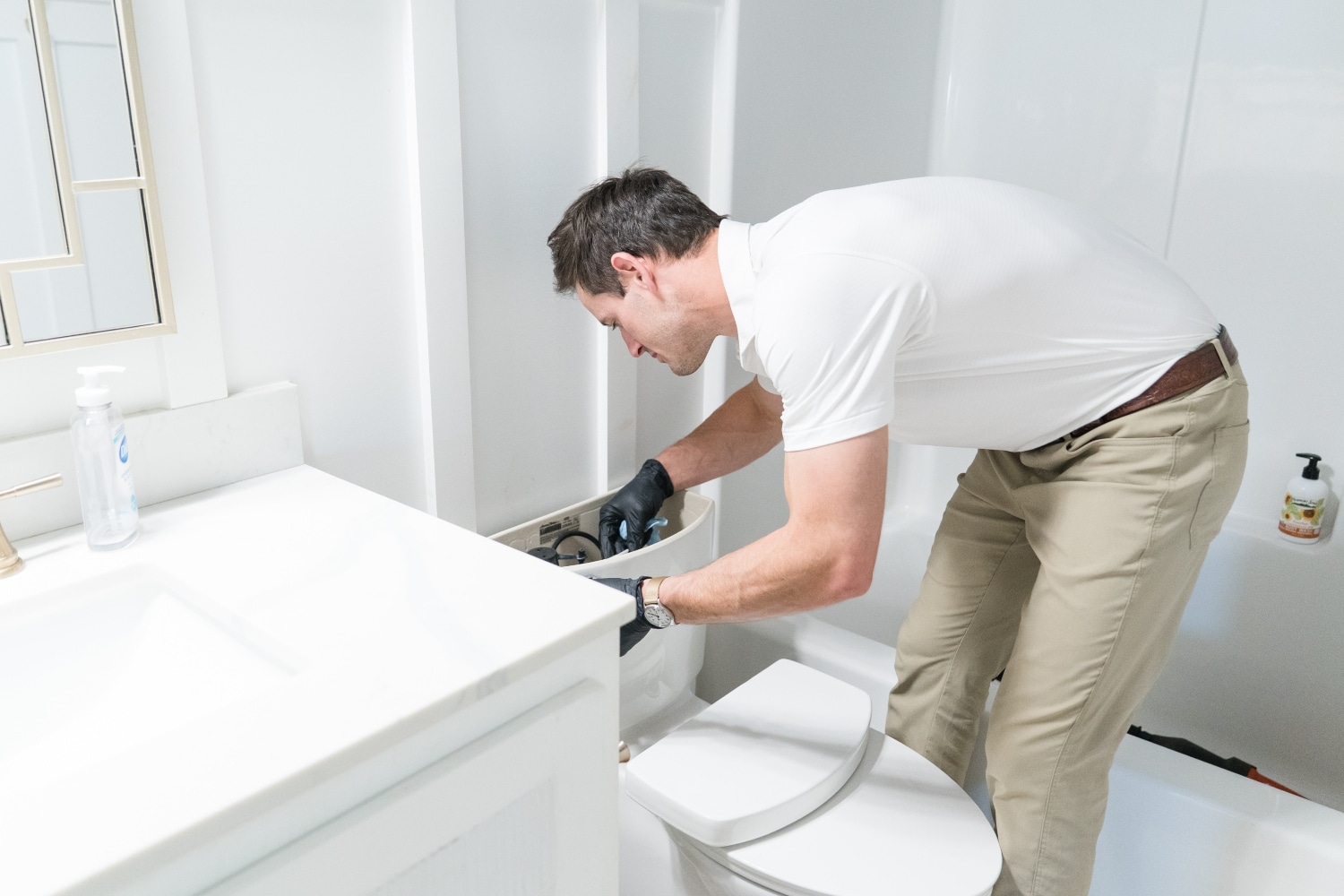

Toilet repair warning signs in Travelers Rest homes often go unnoticed for weeks or months before a homeowner realizes something is actually wrong. A toilet that runs briefly after a flush seems harmless. A slight wobble when you sit down feels minor. Water that takes a long time to refill the tank gets attributed to old pipes. These things are easy to dismiss, but each one points to a real mechanical issue that gets worse the longer it goes unaddressed.
Travelers Rest sits in the foothills of Greenville County, and the housing stock here covers a wide range of ages. Older homes in established neighborhoods near downtown Travelers Rest frequently have toilets and plumbing fixtures that have been in place for decades, and the wear that comes with that kind of age shows up in predictable ways. Even newer construction is not immune. A toilet installed incorrectly or with substandard components can develop the same failure patterns years before it should.
The good news is that most toilet problems announce themselves clearly before they become expensive emergencies. The warning signs below are the ones CB Smith Plumbing encounters most often across Upstate South Carolina homes, and knowing them gives you the information you need to make the call before a small repair turns into a flooded bathroom floor.
In this article, you will learn about:
- The most common toilet warning signs and what each one means
- Why a running toilet costs far more than most homeowners expect
- Structural and mounting problems that put your floor at risk
- When toilet repair makes sense versus full replacement
- What to expect when you call a plumber for toilet work in Travelers Rest
Keep reading to learn which toilet problems you can afford to wait on and which ones you cannot.
The most common toilet warning signs and what they mean
Most toilet failures start small, and the earliest symptoms are easy to spot once you know what you are looking for.
Toilets are mechanical systems with a finite number of moving parts, and each warning sign points to a specific component that is wearing out or failing. A running toilet is not just an annoyance. It is the flapper, fill valve, or float telling you it can no longer hold a proper seal. A weak flush is not just age. It is a clogged rim jet, a partially blocked trap, or a fill valve that is not delivering the right volume of water.
Understanding what each symptom points to is the first step toward an honest repair estimate. CB Smith Plumbing has been serving Upstate South Carolina homeowners since 1982, and toilet repairs are among the most frequent calls the team handles.
A toilet that keeps running after the flush
A toilet that continues to run for more than a minute after flushing, or that cycles on and off throughout the day, is the single most common and most costly toilet problem in residential homes.
The mechanism is straightforward. Water fills the tank after each flush and stops when the float reaches the correct level. When the flapper, float, or fill valve fails, water continues to enter the tank and drain into the bowl past a seal that can no longer hold. You hear it as a faint hiss or a recurring refill cycle that activates without anyone using the bathroom.
According to the U.S. EPA’s WaterSense program, a running toilet can waste approximately 200 gallons of water per day. That is more than 6,000 gallons a month from a single fixture, and most homeowners have no idea the problem is active until they receive an unusually high water bill. By that point, weeks of waste have already accumulated.
- Running that stops when you jiggle the handle: the flapper is not seating properly and the chain or arm needs adjustment
- Running that continues regardless of handle position: the fill valve or flapper has failed and needs replacement
- Phantom flushes (toilet activates on its own): water is leaking slowly past the flapper into the bowl, triggering the fill cycle when the level drops
A running toilet is not a plumbing emergency in the way a burst pipe is, but the water cost makes it urgent in a different way. Every week of delay is hundreds of gallons of water and money going directly down the drain.
Weak or incomplete flushes that leave waste behind
A toilet that requires multiple flushes to clear the bowl, or that leaves visible residue after flushing, is not working the way it should and the cause is almost always mechanical.
The flush mechanism delivers a precise volume of water from the tank to the bowl in a controlled way. When that volume is too low, either because the fill valve is not delivering the right level or because the rim jets around the bowl are partially blocked, the flush cannot generate enough force to clear the trap. Mineral deposits are the most common culprit in Upstate SC homes served by well water or older municipal infrastructure, where calcium and magnesium build up steadily inside the rim jet holes over time.
A weak flush that develops gradually rather than appearing suddenly usually points to accumulation rather than mechanical failure. Rim jet cleaning can resolve it without any part replacement. A flush that deteriorates quickly or that varies from strong to weak unpredictably points to a fill valve issue that a plumber needs to assess.
Trying to compensate for a weak flush by holding the handle down longer works around the symptom but does nothing for the underlying cause, and in older toilets it can accelerate flapper wear by keeping the drain valve open longer than it is designed to be.
Gurgling, bubbling, or unusual sounds after flushing
Sounds coming from a toilet after a flush, or from the toilet when other fixtures are draining, point to something more significant than a simple internal toilet problem.
When a toilet gurgles or bubbles after a flush, air is moving back through the trap or through the drain line in a way it should not. In a properly functioning drain system, waste moves out and air vents upward through the plumbing vent stack on the roof. When the vent is blocked, partially obstructed, or when the main drain line has a blockage downstream, negative pressure pulls air back through the nearest water seal. The toilet trap is often that seal.
Gurgling that happens when someone runs water in the bathroom sink, or when the washing machine drains, is a particularly clear indicator. That symptom means the drain line shared by those fixtures is restricted or obstructed. A camera inspection of the sewer lateral often reveals the source within minutes, and catching a partial blockage at this stage costs far less than dealing with a full backup later. CB Smith Plumbing offers drain cleaning service throughout Greenville County for exactly these situations.
Why a running toilet costs more than most homeowners expect
The financial impact of a running toilet in a Travelers Rest home compounds faster than most people realize, and the water bill spike is often the only thing that finally gets the repair scheduled.
Water is not free in Greenville County, and wasted water is billed the same as water you actually use. According to the EPA’s WaterSense statistics, the average family wastes approximately 9,400 gallons of water per year from household leaks, and fixing those leaks can reduce water bills by around 10 percent. A single running toilet accounts for a substantial portion of that waste in many homes.
The calculation is not complicated. A toilet wasting 200 gallons per day costs real money every month, and the longer it runs, the more the total grows. Homeowners who delay toilet repairs because the repair feels minor often end up having paid far more in elevated water bills than the repair would have cost.
What a running toilet actually costs over time
Running toilet costs scale with time, and the trajectory from minor annoyance to significant expense happens faster than most homeowners expect.
A toilet running at a modest rate might add $30 to $50 to a monthly water bill. A toilet running continuously at a higher flow rate can add $100 or more. Three months of delay while waiting for a convenient repair window can cost more than the repair itself. These numbers vary based on local water rates and the severity of the leak, but the direction is always the same: waiting costs more.
There is also a secondary cost that does not show up on the water bill. A fill valve running continuously under pressure wears faster than one that cycles normally. A problem that starts as a $15 flapper replacement can become a $150 fill valve replacement if ignored long enough, and in some cases a sustained internal leak can stress the base seal and introduce moisture at the floor level.
- Month 1: elevated water bill, minor flapper replacement typically resolves it
- Month 2-3: continued waste, possible fill valve wear, repair cost climbing
- Month 3+: risk of secondary issues including base seal deterioration and floor moisture
The repair is almost always simpler and cheaper than the accumulated cost of the problem it represents.
How to tell if your toilet is leaking silently
The most damaging toilet leaks are the ones you cannot hear, where water seeps past a compromised flapper or base seal without any audible running.
A silent toilet leak is easy to detect at home with a dye test. Add a few drops of food coloring or a dye tablet to the toilet tank and wait ten minutes without flushing. If color appears in the bowl, water is passing through the flapper into the bowl without a flush cycle. The flapper is not seating correctly.
For base leaks, the test is simpler. Dry the floor around the toilet base completely with towels and leave it for a day. Any moisture that reappears at the base, particularly after flushing, indicates the wax ring is failing or the toilet has shifted off its seal. That kind of leak is not visible in the tank or bowl and will not show up on a dye test.
Base leaks are worth treating as a priority because the moisture they introduce to the subfloor is cumulative. Slab leak warning signs share some characteristics with toilet base moisture damage, and in older Travelers Rest homes with slab construction, distinguishing between the two matters for the repair approach.
Structural and mounting problems that put your floor at risk
Some toilet warning signs go beyond the fixture itself and involve how the toilet is seated and sealed to the drain flange and floor, and these problems carry the most serious consequences if ignored.
A toilet that rocks, shifts, or feels unstable underfoot is not just an ergonomic inconvenience. The wax ring that seals the toilet horn to the drain flange is a soft, pressure-sensitive material that depends on the toilet remaining stationary. Every time a loose toilet moves, it compromises that seal incrementally. Once the wax ring fails, wastewater bypasses the drain and enters the subfloor on every flush.
The subfloor damage that follows moves in stages. First comes moisture accumulation in the wood below the tile or vinyl. Then softening of the subfloor material. Then rot. In homes with finished bathrooms above basements or crawl spaces, the damage can extend downward before it becomes visible from above. By the time the floor feels soft or tiles crack, the repair scope has expanded well beyond a simple toilet resetting.
A toilet that rocks or shifts when you sit
Rocking or movement in a toilet base is a clear mechanical signal, and it should never be dismissed as a quirk of the fixture.
A toilet is anchored to the floor through two closet bolts that pass through the base flange and are secured with nuts. When those bolts work loose, when the flange itself cracks or sits too low, or when the floor beneath the toilet softens due to prior moisture damage, the toilet loses its firm connection to the substrate. The result is movement with every use.
In some cases the fix is straightforward, tightening the closet bolts or shimming a slightly uneven floor. In others, the flange needs replacement, or the subfloor needs repair before a proper resetting can hold. A plumber assessing a rocking toilet will check the bolt condition, the flange height relative to the finished floor, and the feel of the subfloor around the base before recommending the scope of work.
Water around the base after flushing
Pooling or dampness at the base of a toilet after flushing is never normal, and it is one of the warning signs that most directly indicates active damage in progress.
Water appearing at the base consistently after flushing means either the wax ring has failed or the toilet has cracked at the base. Both require the toilet to be removed, the flange inspected, the surrounding subfloor assessed, and the toilet reseated or replaced. This is not a job where applying caulk around the base solves the problem. Caulking a leaking toilet base traps moisture rather than stopping it, hiding the damage while it continues to grow.
A single episode of water at the base might reflect condensation in very humid conditions, but recurring moisture after every flush is diagnostic. Call a plumber rather than waiting to see if it resolves on its own, because it will not.
- Water at base only after flushing: wax ring failure or cracked toilet base, requires removal and inspection
- Water at base continuously: condensation is possible in summer humidity, but rule out a slow base seal failure first
- Soft or spongy floor around the base: subfloor moisture damage has already begun, scope now includes floor repair
CB Smith Plumbing handles residential plumbing maintenance across all of Greenville County and can assess base seal issues before the damage extends deeper.
Cracks in the tank or bowl
Hairline cracks in toilet porcelain can go unnoticed for a long time, but they grow under the thermal expansion and contraction of normal use and eventually cause leaks or structural failure.
Tank cracks above the waterline typically cause no immediate leak, but they weaken the tank structurally and will eventually propagate to a point where the tank can no longer hold water safely. Cracks at or below the waterline in the tank cause a steady drip or seep that may be visible at the tank exterior or may track down the outside of the toilet to the base, mimicking a wax ring failure.
Bowl cracks are more serious because any crack in the bowl that reaches the water line will leak actively. If you notice a crack anywhere in the bowl, the toilet needs replacement rather than repair. Porcelain cannot be effectively patched in a wet environment, and a cracked bowl is a structural failure that makes continued use inadvisable.
When toilet repair makes sense versus full replacement
Not every toilet problem calls for a new fixture, and not every old toilet is worth repairing. The decision depends on the age of the fixture, the scope of the current problem, and the repair history.
Most toilet repairs, including flapper and fill valve replacement, are straightforward and inexpensive relative to the cost of a new toilet and installation. A toilet that is mechanically sound except for a worn flapper is worth repairing. A toilet that has been repaired multiple times in recent years, that has a crack in the bowl or tank, or that is more than 25 to 30 years old and showing multiple simultaneous problems, is a reasonable candidate for replacement.
The efficiency argument also matters for older fixtures. Toilets manufactured before 1994 use 3.5 gallons per flush or more. The EPA’s WaterSense program reports that replacing old inefficient toilets with WaterSense-labeled models can reduce toilet water use by 20 to 60 percent, saving the average family nearly 13,000 gallons per year. For a Travelers Rest homeowner paying Greenville County water rates, that annual savings adds up meaningfully over the life of the fixture.
Repair: the right call for most problems
The majority of toilet problems that Travelers Rest homeowners encounter are repairs, not replacements, and the parts involved are relatively inexpensive.
Flappers, fill valves, flush handles, and toilet seats all have clear service lives and straightforward replacement procedures. A plumber can typically replace a flapper and fill valve assembly in under an hour, and the cost difference between a repair visit and a full toilet replacement is substantial. If the toilet is structurally sound and has not been patched repeatedly for the same issue, repair is the right call.
Even a toilet that needs a wax ring reseal, a new flange, or a closet bolt replacement is usually worth repairing rather than replacing if the porcelain is intact and in good condition. The labor for a reseat is significant but still less than a full replacement and installation.
Replacement: when the math shifts
Several specific conditions shift the math toward replacement, and a plumber can help you run through them honestly based on the specific fixture and problem.
Consider replacement over repair when:
- The toilet bowl or tank has a visible crack
- The toilet is older than 25 years and has needed multiple repairs in the past two years
- The toilet uses 3.5 gallons per flush or more and a modern efficient fixture would generate meaningful savings
- The flange has failed and subfloor repair is needed anyway, making installation of a new toilet a marginal additional cost
- The toilet model has been discontinued and replacement parts are difficult to source
CB Smith Plumbing can assess the age and condition of any toilet in a Travelers Rest home and give you a direct comparison of repair versus replacement costs. The goal is always the honest answer, not the more expensive one.
What to expect when you call a plumber for toilet work in Travelers Rest
Understanding what a plumber will do when they arrive for a toilet repair call helps you prepare the space, ask the right questions, and evaluate the recommendation you receive.
Most toilet service calls in Travelers Rest follow a predictable pattern. The plumber inspects the tank internals, checks the base and water supply connection, tests flush performance, and asks about the history of the problem and any prior repairs. That information, combined with a visual and physical inspection of the fixture, drives the repair recommendation.
If a base inspection is needed, the plumber may need to remove the toilet briefly to check the flange condition and wax ring. That is a normal part of assessing a rocking or leaking toilet and does not automatically mean a major repair is coming. The assessment tells you what the actual scope is before any work begins.
What to have ready when the plumber arrives
A few simple preparations make a toilet repair visit more efficient and help the plumber give you a more accurate assessment.
Before the plumber arrives, note when the problem first appeared and what it was doing at that point versus now. A symptom that started as occasional running and has progressed to constant running over three months tells a different story than one that appeared suddenly this week. If the toilet has been repaired before, any information about what parts were replaced and when is helpful.
Clear the area around the base and give the plumber access to the water supply shut-off valve, which is typically on the wall behind and below the toilet. If you have experienced hidden water damage signs in the bathroom before, mention it at the start of the call, because a plumber assessing a toilet in a bathroom with a moisture history will look more carefully at the subfloor and surrounding area.
Questions worth asking before the work begins
A licensed plumber should be able to answer these questions clearly before any repair starts.
Asking the right questions upfront protects you from surprises on the invoice and helps you understand what you are agreeing to:
- What is causing this specific problem, and what parts need to be replaced?
- Is this a repair or does the toilet need replacement?
- If the flange or subfloor needs work, what does that add to the scope?
- What is the expected service life of the parts being installed?
- Are there any other issues with this toilet or the connected drain line that I should know about?
If a plumber cannot answer these questions before starting work, or deflects them without a direct response, that is worth noting. CB Smith Plumbing has been helping Greenville County homeowners hire a plumber they can trust since 1982, and honest answers to honest questions are part of how the company has stayed in business across four decades of Upstate SC homeowners.
After the repair: keeping the toilet in good shape
A few simple habits after a toilet repair extend the life of new components and help you catch the next problem before it escalates.
Check the area around the toilet base after the first week of full use following a wax ring repair or toilet reseal. Some minor residual moisture is normal immediately after the work, but it should be completely dry within a few days. If moisture reappears after that window, contact the plumber.
For flapper and fill valve repairs, listen for the first few days after the fix. A properly replaced flapper seats quietly and cleanly with no running after the tank fills. If you hear any intermittent running or phantom flush cycles within the first week, the component may need adjustment or did not seat correctly during installation.
CB Smith Plumbing also handles water heater repair, drain cleaning, and repiping services for Travelers Rest homeowners who discover additional plumbing issues during a toilet repair visit.
Conclusion
Toilet warning signs in Travelers Rest are easier to catch than most homeowners think, and the cost of catching them early is almost always lower than the cost of waiting. A running toilet, a wobbly base, water pooling at the floor, gurgling after a flush — these are not minor inconveniences. They are mechanical failures in progress, and each one has a direct repair path when you call a plumber before the damage compounds.
CB Smith Plumbing has been handling toilet repairs and full plumbing service for Upstate South Carolina homeowners since 1982. The team is fully licensed, has worked in homes across Travelers Rest and Greenville County for decades, and gives you a straight answer on repair versus replacement before any work begins.
If you are seeing any of the warning signs in this article, call (864) 574-4275 or visit CB Smith Plumbing to schedule a service call.

