
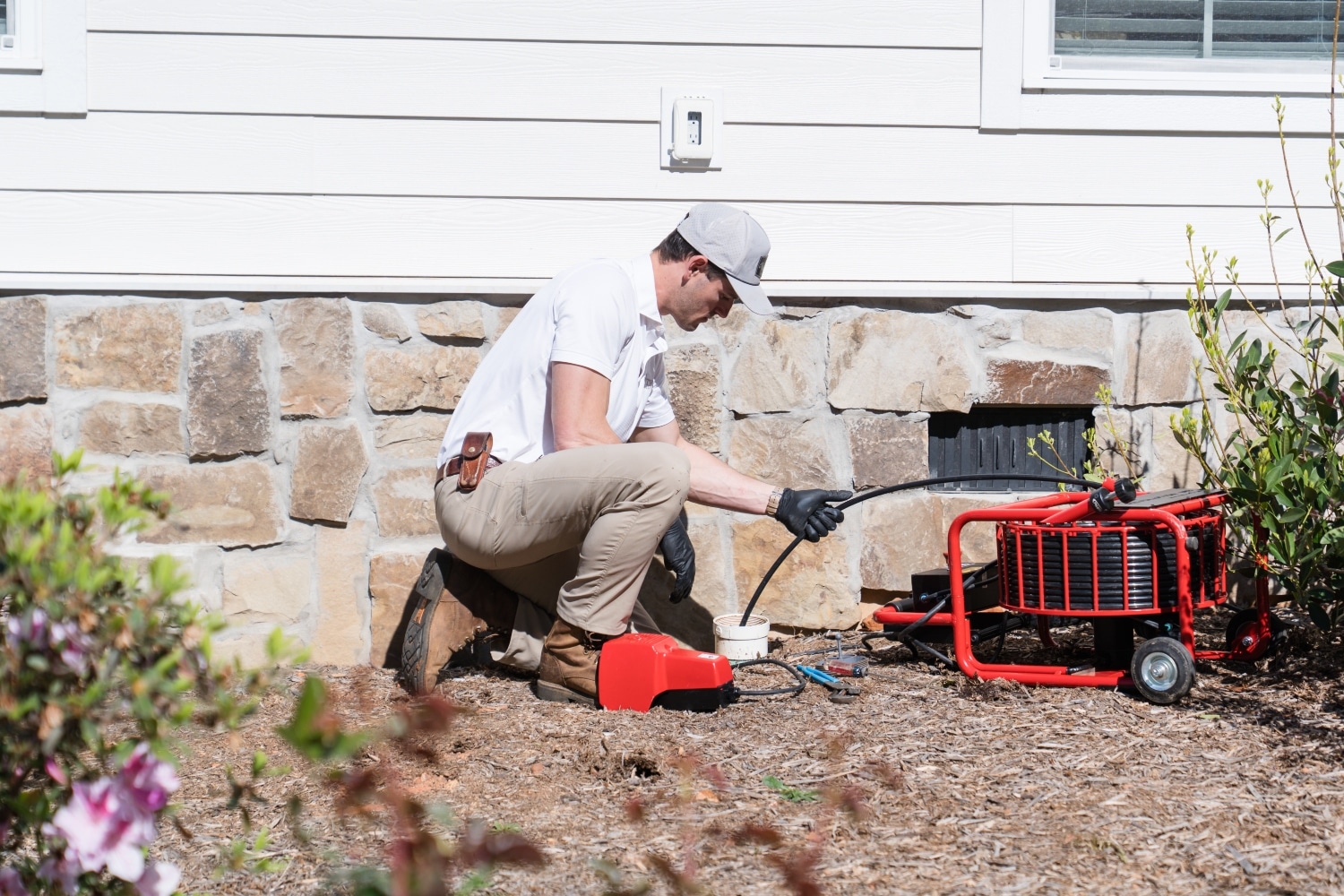

Water and sewer line repair in Taylors is one of the most consequential plumbing decisions a homeowner will make. When an underground pipe starts to fail, the problems rarely announce themselves clearly. A soft patch in the yard, a drain that backs up for no obvious reason, or a water bill that climbs without explanation. These are often the first clues that something is wrong beneath the surface. By the time the damage becomes obvious, it has usually been developing for weeks or months.
Taylors sits in Greenville County, northeast of Greenville proper, and the neighborhood character here reflects decades of established residential development. Many homes in the area were built during eras when cast iron and clay tile were the standard pipe materials, and those systems are now aging toward the end of their useful life.
The clay-heavy soil in this part of Upstate South Carolina also shifts seasonally, putting pressure on underground joints and creating conditions where small cracks become serious failures without much warning.
CB Smith Plumbing has been serving Upstate South Carolina homeowners since 1982. That kind of track record matters when you are dealing with a buried pipe problem, because the most expensive mistakes in water and sewer work happen when the diagnosis is wrong from the start. Getting it right the first time saves you from repeated digging, repeated costs, and the frustration of a problem that keeps coming back.
In this article, you will learn about:
- Why water and sewer lines fail in Taylors homes
- How to read the warning signs before a minor issue becomes a major repair
- What a proper water line repair involves and when replacement makes more sense
- What sewer line repair looks like from inspection through restoration
- How to choose a licensed plumber for underground pipe work in Taylors
Keep reading to understand what is actually happening beneath your yard and what your repair options look like before you ever pick up the phone.
Why water and sewer lines fail in Taylors neighborhoods
Understanding what causes pipe failure in this area makes it easier to catch problems early and make smart decisions when a plumber gives you a repair recommendation.
Taylors homeowners are dealing with a specific combination of factors: aging pipe materials installed decades ago, soils that move with moisture changes, and mature trees whose root systems have had years to probe every joint and crack they can find. None of these problems is unique to this area, but they stack up in ways that make underground pipe failure more common here than in neighborhoods built on more stable ground with newer construction.
The age of the regional water infrastructure puts this in national context. According to the University of Michigan Center for Sustainable Systems, the average age of U.S. water pipes reached 45 years in 2020, up from just 25 years in 1970. Homes built in Taylors during the 1960s, 1970s, and 1980s are now running systems that are squarely in or past that range, and the original materials were not engineered to last indefinitely.
Cast iron and clay tile: the materials aging out underground
Older homes in Taylors commonly have cast iron drain lines and sewer laterals, as well as clay tile sewer pipes connecting to the municipal system.
Cast iron holds up reasonably well for decades, but it corrodes from the inside as mineral deposits accumulate and from the outside as soils shift and abrade the pipe wall. Once corrosion weakens the wall, pressure from the soil above causes cracking, and cracks become pathways for root infiltration. A cast iron line that looked functional on an inspection ten years ago may now have sections that are scaled shut, partially collapsed, or cracked at multiple joints.
Clay tile was the standard sewer material in residential construction through much of the mid-twentieth century, and it has a specific failure mode that comes up repeatedly in Greenville County homes. Clay is rigid, and rigid pipe handles soil movement poorly. When seasonal moisture causes the ground to expand and contract, clay tile joints shift. Those joints are sealed with mortar, which fails over time, leaving gaps that roots find immediately.
- Signs of cast iron failure: rust-colored staining in fixtures, slow drains across the whole house, gurgling sounds when the toilet flushes
- Signs of clay tile failure: sewage odor in the yard, unusually green or wet grass above the line, recurring backups that snake cleaning only temporarily relieves
- Signs applicable to both materials: sewer camera footage revealing cracks, root mass, or bellied sections where water pools
Once a plumber identifies the material and confirms the condition with a camera inspection, the repair path becomes clearer. Not every failing cast iron or clay line needs full replacement. Targeted repairs and localized excavation can address specific failure points, but the decision requires accurate information.
How Upstate SC soils put pressure on buried pipes
The clay-heavy soils found throughout Greenville County expand when wet and contract during dry periods, and that cycle puts ongoing mechanical stress on any buried rigid pipe.
This is not a dramatic event. It happens slowly, over years, as joints shift fractions of an inch at a time. The cumulative effect is misalignment, cracked joints, and eventually sections of pipe that have shifted enough to create low spots where waste collects and does not flow freely. These belly sections lead to recurring clogs and, over time, contribute to pipe wall degradation as waste sits and biological activity attacks the pipe from the inside.
Slope matters enormously for gravity-fed sewer lines. A properly installed sewer lateral maintains a minimum grade to keep waste moving toward the main. When soil movement disrupts that grade, even a small belly can create a situation where a full-force flush does not fully clear the line. You end up snaking the same drain repeatedly without resolving the underlying pipe geometry problem.
Root intrusion from Taylors’ mature tree canopy
Root infiltration is one of the most common causes of sewer line failure in established neighborhoods, and Taylors has the combination of mature trees and older pipe infrastructure that makes this problem nearly inevitable in some yards.
Tree roots follow moisture. A sewer lateral that has any crack or joint gap is actively leaking moisture into the surrounding soil, and root systems grow toward that source. Fine root tendrils enter through hairline cracks, then expand as the root grows, widening the crack and eventually filling sections of the pipe. By the time roots cause a backup noticeable enough that a homeowner calls a plumber, they have often been growing inside the line for years.
Root intrusion is treatable, but it is also one of the strongest arguments for periodic camera inspections on older lines. Catching root growth early means a power snaking or hydro jetting visit clears the line and buys time. Waiting until the line is fully blocked means a major repair job is already overdue.
Reading the warning signs before the damage gets expensive
Most underground pipe failures give you warnings before they become emergencies. Knowing what to watch for is the difference between a managed repair and a crisis call.
The warning signs of water and sewer line problems often go unrecognized because they seem unrelated or easy to explain away. A slow drain gets snaked and clears temporarily. A water bill ticks up slightly and gets attributed to seasonal usage. A soft spot in the yard gets chalked up to rain. The problem with dismissing these signals is that underground pipe damage does not stabilize on its own.
According to the U.S. EPA’s WaterSense program, the average household’s leaks account for more than 9,300 gallons of water wasted every year, and nine percent of homes have leaks wasting 50 gallons or more per day. Water line leaks at or near the main service entry are a significant part of that number, and many go undetected for extended periods precisely because they are underground.
What your water bill and meter are telling you
An unexplained increase in your water bill is one of the clearest early indicators of a water line problem, and it is something every homeowner can monitor without any special equipment.
The test is straightforward. Locate your water meter and take a reading. Turn off every water-using fixture and appliance in the house, making sure nothing is running, and take another reading after two hours. If the meter has moved, water is leaving your system somewhere it should not be. The larger the difference, the more significant the leak.
A gradual bill increase that does not correspond to any change in usage behavior is worth taking seriously. Water lines serving Taylors homes run underground from the meter at the street to the foundation. Any section of that run is susceptible to joint failure, corrosion, or ground movement damage.
- Month-to-month spike with no usage change: strong indicator of an active leak
- Higher winter usage than expected: pipes under driveways or near crawl space entries are susceptible to ground movement in cold weather
- Meter movement with all fixtures off: confirms a leak somewhere in the service line
If the meter test confirms a leak, the next step is locating it. A licensed plumber with pipe-locating equipment can trace the service line and often identify the leak area without digging. That diagnostic step is what separates a targeted repair from exploratory excavation.
Sewer warning signs that homeowners miss
Sewer line problems tend to announce themselves through drain behavior throughout the house, not just at a single fixture.
A single slow sink drain is usually a localized clog. When multiple drains across the house slow down at the same time, that pattern points to the main sewer lateral. The entire house drains through one pipe, and when that pipe is compromised, every fixture is affected.
Watch for these specific patterns:
- Water backing up into the tub when you flush the toilet: the main line is blocked and waste is seeking the lowest available opening
- Gurgling from floor drains or tub drains when you run water elsewhere: air is being pushed back through the system because flow is restricted
- Sewage odor from floor drains or in the crawl space: a cracked lateral is venting sewer gas into the home
- Wet or unusually green patches in the yard above the sewer line route: an actively leaking lateral is saturating the soil above it
Any one of these symptoms warrants a camera inspection. Two or more appearing together is a strong indication that the sewer lateral needs repair or replacement, and calling sooner rather than later matters because a lateral that is actively leaking can damage the surrounding soil structure, create foundation moisture issues, and in some cases trigger environmental health concerns.
Foundation and crawl space changes worth investigating
Changes to how your foundation or crawl space looks and feels can sometimes trace back to a plumbing leak beneath the slab or adjacent to the foundation wall.
Efflorescence, the white mineral deposits that form on concrete when moisture migrates through it, near the base of foundation walls can indicate a water line or sewer lateral running close to the foundation. Persistent crawl space moisture that does not respond to drainage improvements deserves a plumbing inspection as a possible cause. In homes with a slab foundation, slab leaks from pressurized water lines running under the concrete create floor staining, warm spots underfoot, and gradual soil erosion beneath the slab.
What water line repair looks like from start to finish
A water service line repair involves several distinct phases, and understanding the process helps you know what questions to ask and how to evaluate the work being done.
The service line carries pressurized water from the municipal main at the street to your home. It is the one pipe that, when it fails, cuts off water to the entire house. Failures range from minor leaks at a coupling or joint to full-pipe ruptures from ground movement or corrosion. The repair approach depends on where the failure is, how extensive the damage is, and what material the existing pipe is made of.
CB Smith Plumbing has been diagnosing and repairing water lines across the Upstate for over four decades. The process always starts with accurate location and diagnosis before any shovel hits the ground.
Locating the line and diagnosing the problem
Accurate diagnosis is what separates a targeted repair from expensive guesswork, and it requires both pipe-locating equipment and a plumber who knows how to interpret what the equipment shows.
Most residential service lines in Taylors run from the meter box at or near the street, across the yard, and into the home at or below the foundation. The exact path varies by lot layout and original installation, and the pipe may run under a driveway, landscaped beds, or other structures. Locating the pipe precisely before digging is critical both for accuracy and for minimizing landscape disturbance.
Leak detection for pressurized lines often uses acoustic equipment that picks up the sound frequency of pressurized water escaping through a breach. A skilled technician can pinpoint the leak location within a foot or two, which determines exactly where excavation needs to happen. This matters enormously on a job where every foot of unnecessary digging adds labor and restoration cost.
- Leak detection on pressurized lines: acoustic listening equipment traces the escaping water sound to the breach point
- Pipe material identification: determines repair approach and whether full replacement is the more durable choice
- Meter reading correlation: confirms that the identified leak accounts for the usage discrepancy showing on the meter
Once the failure point is located and the pipe material is confirmed, the plumber can give you a repair recommendation based on real information rather than assumption.
Repair versus replacement: making the right call
Spot repair and full replacement are both legitimate options, and the right answer depends on the age of the pipe, the material, and whether the failure is isolated or a symptom of overall pipe condition.
A copper service line with a single joint failure in an otherwise sound pipe is a reasonable candidate for spot repair. The plumber excavates the failure point, cuts out the damaged section, and installs a coupling with new pipe. The rest of the line remains intact and in service.
An aging galvanized steel or polybutylene line with multiple failure points or widespread corrosion is a different situation. Patching one breach on a line that has other compromised sections means coming back for additional repairs within a few years. In those cases, full replacement with modern PEX or copper pipe is usually the more economical decision over a five- to ten-year horizon.
The conversation about repair versus replacement is one every CB Smith plumber is prepared to have honestly. The goal is to give you the information to make the right decision for your house and your budget, not to push the most expensive option.
Excavation, repair, and site restoration
The physical repair of a water line involves excavation, pipe work, pressure testing, and then restoring the surface to its pre-work condition.
Once the failure point is exposed, the damaged pipe section is removed and replaced. For spot repairs, this means cutting out a section and installing a coupling with new pipe material compatible with the existing line. For full replacements, the new line is run from the meter to the foundation entry point, connections are made at both ends, and the old line is left in place or removed depending on site conditions.
After the pipe work is complete, the line is pressure-tested before backfilling. Testing confirms the repair is sound before the excavation is closed. Backfilling follows in lifts, with soil compacted to minimize settling. Surface restoration, whether that means patching sod, replacing gravel, or addressing a section of driveway or walkway, is handled as part of the job.
What a sewer line repair involves in Taylors
Sewer line repair is almost always more complex than water line repair because the line is larger, it is not under pressure, and the diagnostic process requires a camera inspection before any meaningful repair decision can be made.
The sewer lateral runs from the foundation of your home to the municipal sewer main in the street or alley. It operates by gravity, which means slope is critical and any disruption to grade creates flow problems. It is also the pipe that handles everything your household puts down every drain, and when it fails, the consequences inside the home are both immediate and unpleasant.
According to the American Society of Civil Engineers’ 2025 Infrastructure Report Card, the EPA has determined that the nation’s water infrastructure needs $625 billion in investment over the next 20 years, a figure that is 30 percent higher than the 2018 estimate. That national investment gap translates directly into aging infrastructure at the individual property level, where homeowners are responsible for maintaining the lateral from the house to the main.
Sewer camera inspection: what it shows and why it matters
A sewer camera inspection is the diagnostic foundation of every sewer repair recommendation, and no credible plumber should recommend a major repair without completing one first.
The camera is a flexible, waterproof unit mounted on a cable that the technician feeds through a cleanout or pulled fixture. As it travels through the line, it transmits live video of the pipe interior. A trained eye reads that footage to identify:
- Root infiltration and the density of root growth in the affected sections
- Cracked or broken pipe sections and the extent of the damage
- Belly sections where the pipe has shifted and water or waste pools
- Offset joints where pipe sections have separated or misaligned
- Scale buildup or grease accumulation restricting flow
- Collapsed sections requiring full replacement of the affected run
The camera also carries a locating transmitter that allows the technician to pinpoint the depth and position of any defect from the surface. That information determines where excavation needs to happen and how deep, which directly affects the repair cost estimate.
Sewer line repair options for Taylors homes
Once the camera has documented the line’s condition, the repair approach can be matched to the actual findings rather than to a guess.
Not every sewer problem requires excavation. Isolated root intrusion in an otherwise structurally sound line often responds well to hydro jetting, which clears the line completely without mechanical contact that might further stress a fragile pipe. For lines that have isolated cracks or offset joints but are otherwise in good structural condition, spot excavation to the specific failure point limits the scope of the job.
For lines with widespread root intrusion, multiple failure points, or sections that have degraded to the point where structural integrity is compromised throughout, full replacement is the more reliable answer. This involves excavating the lateral from cleanout to main connection, removing the old pipe, and installing new PVC in a properly sloped run.
The typical sequence for a full lateral replacement in Taylors:
- Camera inspection and locating to map the entire run and identify all failure points
- Marking the pipe path and depth at key points on the surface
- Excavation in sections or as a continuous trench, depending on depth and obstacles
- Removal of the old pipe and installation of new PVC at proper grade
- Pressure test or flow test to confirm the new line drains cleanly
- Backfill with compaction, followed by surface restoration
The goal at every step is a line that flows correctly and requires no attention for the next several decades.
When sewage backup becomes an emergency
An active sewage backup into the home demands same-day attention because sewage contains pathogens that make the affected area a health risk until it is cleared and the line is restored.
When waste is backing up into floor drains or fixtures, the line is blocked to the point where no drainage is possible. This is not a situation where you wait for a convenient appointment. CB Smith Plumbing provides urgent service for active backups because leaving sewage in contact with interior surfaces creates health risks and starts structural damage quickly.
If you experience a backup, stop using water in the house immediately to avoid adding more volume to an already-blocked line, and call for service. The technician will clear the blockage first to restore drainage, then scope the line to understand what caused the backup and what repair is needed to prevent a recurrence.
Choosing the right plumber for underground pipe work
Underground pipe work in Taylors involves access to rights of way, coordination with the utility responsible for the main connection, and compliance with local codes. All of this requires a licensed contractor.
The work is regulated for good reason. An improperly sloped lateral creates long-term drain problems. An improperly backfilled excavation can settle and damage the pipe, a driveway, or a foundation. A water line installed without pressure testing is a liability waiting to manifest. Licensing exists to ensure that the contractor doing this work has demonstrated the knowledge and carries the insurance to do it correctly.
CB Smith Plumbing is fully licensed and has been operating in Greenville County for over four decades. Every plumber on the team works under that license, and every job comes with the standards that have kept this company serving the same communities since 1982.
What to ask before you hire anyone for this work
A few direct questions tell you most of what you need to know about whether a contractor is actually qualified to do underground pipe work.
Before agreeing to any sewer or water line repair in Taylors, confirm these points with any contractor you are considering:
- Are you licensed in South Carolina and can you provide your license number?
- Are you fully insured, including liability and workers’ compensation?
- Will you pull any required permits for this job?
- Do you perform a camera inspection before recommending sewer repair?
- What is included in surface restoration after excavation?
- How do you pressure-test water line repairs before backfilling?
A contractor who can answer all of these questions specifically and directly is worth considering. One who deflects, hedges, or pushes you toward a decision before completing a proper diagnosis is not.
Permits, utility coordination, and who is responsible for what
Understanding the division of responsibility between the homeowner, the contractor, and the utility is important before any work begins near the street or the main connection.
In most Taylors and Greenville County situations, the homeowner is responsible for the water service line from the meter to the house and for the sewer lateral from the foundation to the connection point with the municipal main. The utility is responsible for the main itself. Any work on or near the main connection typically requires coordination with the utility and may require a permit from the county or municipality.
A reputable plumber handles this coordination as part of the job. You should not be navigating permit applications or utility contacts on your own for a repair of this scope. If a contractor is unwilling to pull permits or coordinate with the utility, that is a significant warning sign.
Why experience with Upstate SC conditions matters
A plumber who has spent decades working in Greenville County soil conditions and older residential construction understands the specific failure patterns that show up in Taylors homes.
The clay soils here behave differently from the sandy soils found in the Lowcountry or the rocky ground in the mountain foothills. A plumber who primarily works in another region of the state may correctly diagnose the immediate problem but miss the context that explains why it happened and what is needed to keep it from recurring. Backfill technique, grading recommendations, and decisions about pipe material selection are all affected by local soil behavior.
CB Smith Plumbing has been in this region long enough to have repaired lines in homes built in every decade of Taylors’ residential development. That accumulated local knowledge is part of what you are paying for when you hire a company that has been doing this work in the same neighborhoods since 1982.
Conclusion
Underground water and sewer lines do not give you unlimited time to make decisions. When a line starts to fail, the damage compounds, and what starts as a repair job can become a much more extensive project if it is left unaddressed. The homeowners who come out of these situations with the best outcomes are the ones who caught the early warning signs and called a plumber before a manageable problem became a crisis.
Taylors has the housing age, soil conditions, and tree canopy that make regular attention to underground plumbing a smart investment. A camera inspection on a line that has never been looked at tells you exactly what you are dealing with, and that information is worth having before something forces the issue.
CB Smith Plumbing has been doing this work in Upstate South Carolina since 1982. If you are dealing with warning signs or you simply want to know the condition of your underground lines, call (864) 574-4275 or visit CB Smith Plumbing to schedule a service appointment.


