
Knowing how to prevent drain clogs in Boiling Springs is one of the most practical things a homeowner in Spartanburg County can do for their plumbing. Drains look simple, but what builds up inside them over months and years is anything but. Grease hardens. Hair accumulates. Soap scum layers on pipe walls and narrows the opening until water has nowhere to go. By the time most homeowners notice the problem, it has usually been growing for a long time.
The stakes are higher than a slow sink. According to the Insurance Information Institute, water damage and freezing account for nearly 22.6% of all home insurance claims nationally, with the average payout exceeding $13,000 per incident. A stubborn clog that backs up into a bathroom or kitchen can create that exact kind of damage. The good news is that most of these situations are preventable with habits that take seconds to establish.
CB Smith Plumbing has been serving Boiling Springs and the broader Spartanburg County area since 1982. Over those decades, the team has seen the same clog causes come through the door again and again. The patterns are consistent, and so are the prevention strategies. This article pulls from that experience to give you an honest picture of what clogs drains, what does not, and what to do when prevention is no longer enough.
In this article, you will learn about:
- What causes most drain clogs in Boiling Springs homes
- How to protect every drain in your house with simple habits
- The products and tools that actually help, and the ones that hurt
- When a slow drain means something more serious is developing
- What to expect from professional drain cleaning and maintenance
Keep reading to understand which daily habits make the biggest difference before a small slowdown turns into a full backup.
What causes most drain clogs in Boiling Springs homes
Drain clogs almost always follow a pattern. They rarely happen suddenly. Instead, small amounts of material accumulate over time until the pipe narrows enough to fail. Understanding what triggers that buildup in the first place is the first step toward keeping it from happening in your home.
Most homeowners blame the wrong thing. They assume a single event caused the clog, when the reality is that the backup they are dealing with today was months in the making. The drain was narrowing gradually, and the last thing that went down it simply pushed the buildup over the edge.
Kitchen drains and the grease problem
Fats, oils, and grease are the most destructive drain materials in any kitchen. When hot grease goes down the drain, it is still liquid. By the time it travels a few feet into the pipe, it cools and solidifies. The sticky layer it leaves behind catches food particles, soap, and every other bit of material that follows. Over months, that layer grows thick enough to block the pipe entirely.
Common kitchen mistakes include:
- Pouring cooking grease or bacon fat directly down the drain
- Running hot water while pouring oil, believing it flushes the grease safely through
- Putting starchy foods like pasta, rice, and potato peels down the garbage disposal
- Allowing coffee grounds to accumulate in the drain regularly
The fix is straightforward. Let grease cool in a container, then throw it in the trash. Keep a small container near the stove for used cooking oil and empty it into the garbage when full. It takes five extra seconds and prevents a service call.
Food particles that escape the disposal add to the same problem. A drain screen on every kitchen sink catches the material the disposal misses and costs almost nothing to buy. If your kitchen sink has been draining slowly for a while, that buildup may already be significant enough to warrant a professional drain cleaning before it becomes a full stoppage.
Bathroom drains and hair buildup
Bathroom drains see a different category of clog culprit: hair. A single shower produces far more hair than most people realize, and that hair does not simply wash away. It wraps around drain parts, collects soap residue, and builds into a dense mat that water cannot get through.
Soap scum compounds the problem. Bar soap and many liquid soaps leave a film on pipe walls that acts like glue for passing debris. Hair sticks to it. Toothpaste residue sticks to it. Anything that goes down the drain has a better chance of catching and staying.
Items that do not belong in bathroom drains include:
- Cotton swabs and cotton rounds
- Hair bands and bobby pins
- Dental floss, which tangles around pipe joints and traps other debris
- Baby wipes and makeup removal wipes, even those labeled flushable
Installing a drain cover or hair catcher on every shower and tub drain is the single most effective bathroom prevention habit. These tools are inexpensive and catch the majority of hair before it reaches the pipe. Cleaning them out once a week keeps them effective.
Toilets and what should never be flushed
Toilet clogs follow a short list of causes, and most of them involve items that were flushed when they should have gone in the trash. The toilet drain is designed to handle one thing: waste and toilet paper. Most of what gets flushed beyond that becomes a clog waiting to form.
The U.S. Environmental Protection Agency identifies improper flushing of household products as a direct contributor to sewer backups and blockages, both inside homes and in the municipal sewer lines they connect to.
Items that cause toilet clogs and should always go in the trash include:
- Flushable wipes (they do not break down like toilet paper does)
- Paper towels and facial tissue
- Cotton balls and feminine hygiene products
- Disposable diapers
- Medications (which should go through a proper medication disposal program, not the toilet)
A simple trash can with a lid next to every toilet eliminates most of the temptation to flush items that do not belong there. It is one of the most low-effort prevention habits available to any Boiling Springs homeowner.
Simple daily habits that keep drains clear
Drain maintenance does not need to be complicated. The habits that protect plumbing most are the ones that happen routinely, not the occasional deep clean. Building a short list of consistent behaviors into your daily routine does more over the course of a year than any one-time treatment.
The goal is to stop buildup before it reaches the point where it restricts water flow. Most buildup does not cause problems at first. It causes problems when it has gone unaddressed for months. Homeowners across Spartanburg County who know what to look for in a plumber also tend to be the same homeowners who schedule routine maintenance before something fails.
What to run down drains and when
Hot water is one of the best tools a homeowner has for drain maintenance. Running hot water for 30 to 60 seconds after each use of the kitchen sink flushes loose grease and food particles deeper into the line before they can settle on pipe walls. This habit costs nothing and makes a real difference over time.
Baking soda and white vinegar is a mild, safe method for keeping drains clean. Pouring about half a cup of baking soda down a drain followed by half a cup of white vinegar creates a bubbling reaction that loosens light buildup. Letting it sit for 10 to 15 minutes and then flushing with hot water clears the loosened material. This is safe for most pipe types and can be done monthly as a routine.
A few habits worth maintaining in every kitchen and bathroom include:
- Run hot water for at least 30 seconds after every use
- Flush the baking soda and vinegar combination down each drain once a month
- Clean bathroom drain covers and hair catchers weekly
- Pour grease into a separate container rather than the drain
These are not difficult habits. But they compound. A drain that gets this kind of routine attention for a year runs noticeably better than one that does not.
Products to avoid in your drains
Chemical drain cleaners are tempting because they are easy to buy and appear to work quickly. The problem is that many of them create more damage over time than they prevent. Products containing sodium hydroxide or sulfuric acid can break down buildup, but they also degrade rubber gaskets, damage older pipes, and leave corrosive residue that weakens pipe walls with repeated use.
Enzyme-based drain cleaners are a safer alternative. These products use biological agents to break down organic material like grease and soap scum without attacking the pipe itself. They work more slowly than chemical cleaners but are much safer for older plumbing, which is common in Boiling Springs homes built several decades ago. Homes of that age sometimes have pipes that also benefit from a broader look at the residential plumbing system as a whole.
Products to avoid putting down your drains include:
- Bleach in regular, large quantities (occasional disinfecting use is fine)
- Chemical drain cleaners used repeatedly on the same drain
- Drain deodorizers that use caustic chemicals rather than enzyme formulas
- Garbage disposal cleaning tablets that contain harsh acids
If a drain is slow, a chemical cleaner might seem like the quick fix. But a drain that responds temporarily to a chemical and then slows again is telling you that the real problem is further in the line, not something a bottle can address. That situation calls for a professional inspection, not another round of chemicals.
Setting a seasonal drain maintenance schedule
Seasonal maintenance is one of the most underrated approaches to drain health. Most homeowners do not think about their drains at all until something backs up. Scheduling a brief check at the start of each season keeps small problems from becoming expensive ones.
Each season brings different conditions that affect drain performance:
- Spring: increased rainfall can stress older drains and reveal root intrusion that has been developing quietly through winter
- Summer: higher household water usage and more outdoor cleaning mean drains see heavier volume
- Fall: leaves and debris are more likely to enter exterior drains, and grease buildup from holiday cooking accelerates
- Winter: cold temperatures can affect pipes in unheated areas and slow drainage in exterior lines
Setting a seasonal reminder to inspect drain flow at every fixture in the house takes about 15 minutes. Run each fixture, note any that drain slowly, and schedule service before the slow drain becomes a full stoppage. The U.S. EPA estimates that the average household’s leaks and plumbing inefficiencies waste nearly 10,000 gallons of water per year, and a slow drain that is part of a larger leak problem contributes to that waste quietly for months before anyone notices.
Protecting drains in specific rooms
Every room in the house has its own drain profile, meaning different materials flow through it and different problems are most likely to develop. A one-size approach to drain maintenance misses the specific vulnerabilities of each fixture. Knowing what each room’s drains face helps you target prevention where it matters most.
Boiling Springs homes range in age considerably, from newer construction in growing subdivisions to older homes that have been in families for generations. Older homes often have pipe materials that are more sensitive to buildup and more susceptible to root intrusion from mature trees. If an older home has never had a full plumbing evaluation, repiping services may be a more cost-effective long-term solution than repeated reactive drain work.
Kitchen and laundry room drains
The kitchen drain carries the widest variety of materials and has the highest potential for grease buildup. Pairing a drain screen with a strict no-grease-down-the-drain rule covers the majority of risk.
The laundry room drain is often overlooked but handles a significant volume of water, lint, and detergent residue every week. Washing machines discharge large amounts of water rapidly, and the drain must be able to handle that volume without backing up. Lint that escapes the washing machine basket can accumulate in the drain line over time, especially if the drain is also receiving any floor drainage.
Steps that protect kitchen and laundry drains include:
- Install and clean a strainer or screen on the kitchen sink weekly
- Keep laundry room floor drains clear of lint and debris
- Use high-efficiency (HE) detergent in amounts specified by the manufacturer, since excess detergent leaves residue in both the machine and the drain
- Avoid washing items that produce heavy amounts of sand, dirt, or pet hair without shaking them out first
If the laundry drain backs up even occasionally, that is a signal worth acting on. An occasional backup that returns to normal is not a minor nuisance; it is evidence of partial blockage that will eventually become a complete one.
Bathroom sinks, showers, and tubs
Bathroom drains deal primarily with hair, soap scum, and personal care products. The combination of those three materials creates a resilient buildup that resists simple flushing.
The shower drain is the highest-risk bathroom fixture in most homes. Hair, exfoliating scrubs, conditioner residue, and shaving cream all contribute to buildup. A drain cover with a fine mesh catches most of it before it reaches the pipe. Consistent shower plumbing maintenance habits applied at every bathroom in the house make a compounding difference over years.
Bathroom maintenance steps that make a real difference include:
- Replace basic drain covers with hair-catching inserts on every shower and tub
- Clean those inserts at least once a week
- Run the baking soda and vinegar flush monthly in every bathroom drain
- Avoid letting toothpaste caps, soap slivers, or any small object near an open drain
Sink drains in bathrooms are more likely to suffer from soap scum and toothpaste residue than hair, but the effect is the same over time. A drain that runs clearly after cleaning but slows within a week or two is indicating that the buildup is beyond the drain cover and into the pipe wall itself.
Basement and floor drains
Floor drains in basements, utility rooms, and garages are easy to ignore because they are rarely used. That invisibility makes them a common source of problems. A floor drain that sits dry for months can lose the water seal in its trap, allowing sewer gases to enter the home. Debris and sediment accumulate in and around these drains with no regular water flow to keep them clear.
Pouring a gallon of water into each floor drain every couple of months maintains the water seal and keeps the drain functional. Homes with basement floor drains also benefit from a working sump pump to manage any water that does find its way to the lowest level of the house. If a floor drain has a cover that appears corroded or broken, replacing it is a simple and inexpensive fix that prevents debris from entering the line.
When to call a plumber in Boiling Springs
Prevention handles most drain problems, but it does not handle all of them. There are situations where the issue is beyond what any homeowner habit can address, and waiting too long to call a professional makes those situations significantly more expensive to resolve.
The challenge is recognizing the difference between a drain that needs a habit adjustment and one that needs a licensed plumber. Some signals are clear and urgent. Others are easy to misread as minor inconveniences when they are actually early warning signs of something more serious building in the line.
Warning signs that a clog is developing deeper in the system
A single slow drain usually indicates a localized blockage, often at the fixture trap or just past it. Multiple slow drains, or any drain that backs up when another fixture is used, indicates a problem further in the main line.
Gurgling sounds coming from a drain when water is running elsewhere in the house are a consistent sign of a partial blockage. The gurgle is air being forced back through the line because the blockage is restricting flow. It is an early warning that the line is not moving water freely. Hidden leak detection problems can develop alongside drain issues and go unnoticed for months when both are traced back to the same aging section of pipe.
Signs that a deeper problem is developing include:
- Two or more drains in the house running slowly at the same time
- Gurgling or bubbling noises from a toilet, tub, or floor drain when using another fixture
- A sewage smell near drains without an obvious cause
- Water backing up into the tub or floor drain when the toilet is flushed
- A toilet that drains slowly or requires multiple flushes regularly
Any of these signals warrants a call to a licensed plumber. Catching the warning signs early is always less expensive than managing the damage after a backup occurs, and an emergency plumber in Spartanburg is available when waiting is not an option.
The difference between a DIY fix and a professional job
Minor clogs at the fixture level are often within homeowner reach. A plunger or a drain snake on a bathroom sink is a reasonable first attempt at a localized clog. But there are clear limits to what DIY can address safely.
Chemical cleaners used on a partial blockage deep in the line often dissolve the outermost layer of the clog and provide temporary improvement. The core of the blockage remains. When the drain slows again within days or weeks, the clog has already returned to near its previous size. Repeating this cycle damages pipes and delays necessary professional service.
A professional plumber uses equipment that reaches the actual blockage location and removes it completely. Camera inspection identifies what is causing the problem and exactly where it is located, which matters when sewer line issues are contributing to drainage problems throughout the house.
Situations that call for a professional include:
- Any clog that does not resolve with a plunger and basic snaking
- Recurring clogs in the same drain that keep returning within weeks
- Slow drains in multiple fixtures at the same time
- Any suspicion of a break, root intrusion, or pipe damage in the main line
Understanding what annual drain maintenance accomplishes
Annual professional drain maintenance is not a luxury. For a home that has been in use for several years, it is maintenance in the same category as furnace tune-ups and roof inspections. The goal is to catch buildup before it becomes a blockage and to identify pipe issues before they become emergencies.
A professional drain maintenance visit covers more than a standard service call for an active clog. It includes inspection of the full drainage system, identification of any sections showing early signs of buildup or damage, and cleaning that addresses the entire line rather than just the immediate problem area. For Spartanburg County homeowners also dealing with hard water, a water softener installation reduces mineral scale buildup in pipes and extends the interval between drain maintenance visits.
Homeowners who schedule annual maintenance see fewer emergency calls over the life of the home. Pipes that are regularly cleared of buildup last longer and perform more reliably than those that only receive attention when something fails. This is as true in Boiling Springs as it is in Greer, Greenville, and every other community CB Smith Plumbing serves in the Upstate.
What to expect from professional drain services in Boiling Springs
Understanding what professional drain services involve removes a lot of the hesitation homeowners feel about calling. Many people delay a call because they are not sure whether the job warrants it or what it will entail. Knowing the process in advance makes the decision straightforward.
CB Smith Plumbing has been in the Spartanburg County area since 1982, and the team handles drain calls throughout Boiling Springs, Inman, Duncan, Lyman, and surrounding communities. The goal on every call is not just to clear the immediate problem but to give the homeowner a clear picture of what their drain system looks like and what, if anything, needs attention.
How drain cleaning and camera inspection work
Most drain service calls begin with a professional assessment of the problem drain before any equipment goes into the line. A plumber will ask about what symptoms you have seen, how long they have been present, and whether any other fixtures are affected. That information shapes the approach before any work begins.
Camera inspection is one of the most useful tools available for drain diagnosis. A small camera on a flexible cable moves through the line and transmits live footage to a screen the plumber monitors in real time. It identifies the precise location of a blockage, shows whether the clog is organic buildup, root intrusion, a collapsed pipe, or a foreign object, and reveals any sections of the line showing early signs of damage or deterioration.
The inspection process typically involves:
- Inserting the camera through a cleanout access point or directly through the drain
- Moving through the line to the location of the blockage or the problem area
- Documenting what is found so the homeowner can see it directly
- Identifying any secondary issues, such as root intrusion or pipe damage, that may not yet be causing active symptoms
Camera inspection is especially valuable when slab leak warning signs are present alongside drain slowdowns, since both can originate from the same deteriorating section of the underground line.
Drain snaking and hydro jetting explained
Drain snaking and hydro jetting are the two primary methods for clearing blockages, and the right choice depends on what the blockage is made of and where it is located.
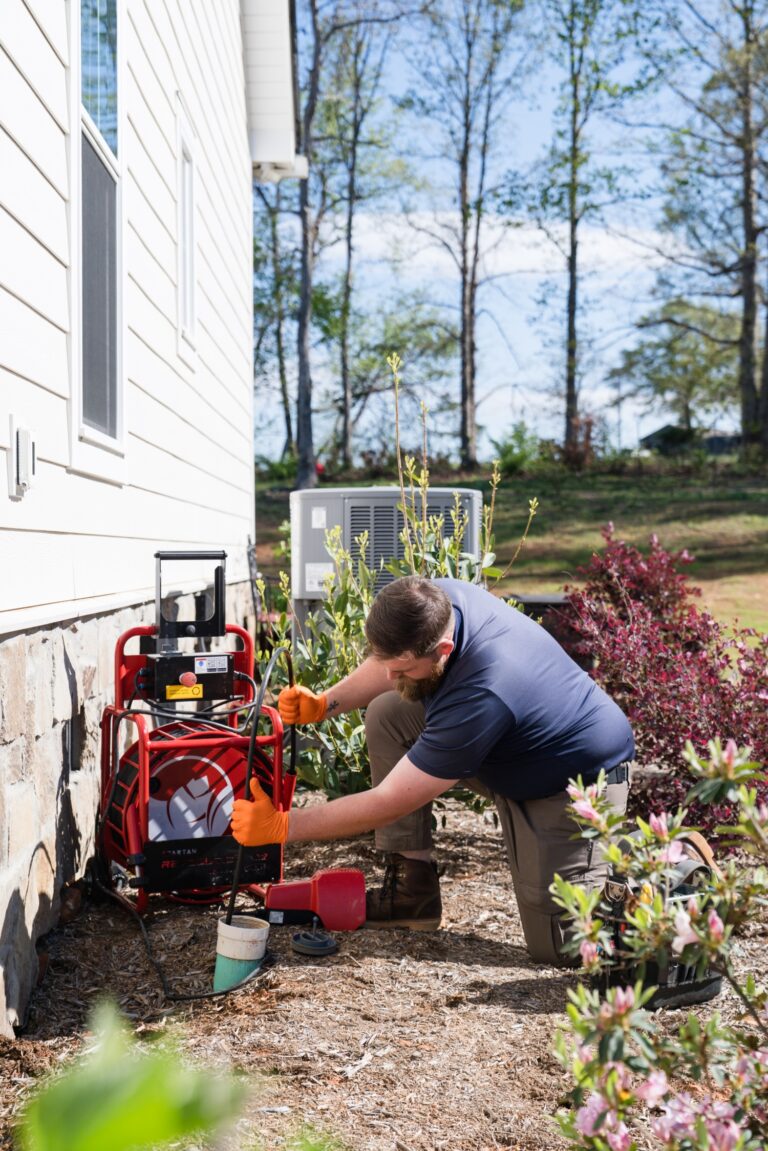
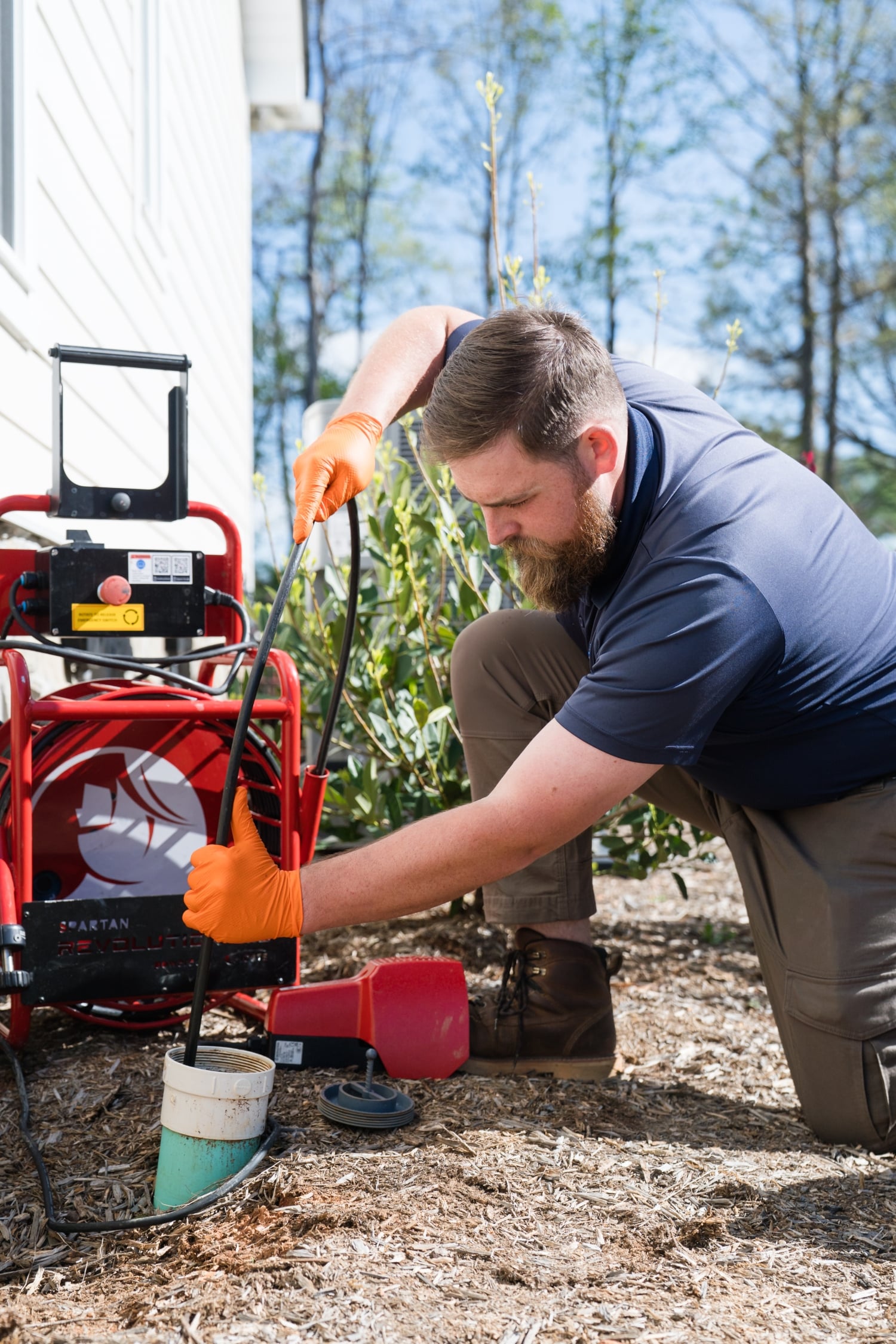
A drain snake is a flexible cable that reaches into the pipe and physically breaks up or pulls out a clog. It is effective on soft clogs like hair mats and soap accumulation close to the fixture. Snaking is fast, minimally invasive, and appropriate for most routine clogs.
Hydro jetting uses high-pressure water delivered through a specialized nozzle to scour the inside of the pipe wall. It removes not just the active blockage but the buildup coating the pipe that will eventually cause the next clog. It is the appropriate method when:
- A drain has been slow repeatedly and standard snaking provides only temporary relief
- Grease buildup has accumulated heavily in a kitchen drain line
- A camera inspection has confirmed significant pipe wall buildup
- The main sewer line needs clearing due to root intrusion or debris accumulation
Both methods are tools the team at CB Smith Plumbing uses based on what the job requires. Homeowners should not need to specify which method; describing the symptoms and the history of the problem gives a professional the information needed to recommend the right approach.
Maintenance plans and what they cover
Proactive drain maintenance plans allow homeowners to schedule regular service rather than waiting for a problem to appear. This approach is particularly well-suited for Boiling Springs homes with older plumbing, heavy household use, or a history of recurring clogs.
A maintenance visit is not the same as a service call. It is a scheduled inspection and cleaning that happens before a clog forms. The plumber clears any light buildup found during the visit, identifies any sections showing early signs of narrowing or damage, and gives the homeowner a report on the condition of the drainage system. Homes that are also undergoing renovation work benefit from reviewing remodel plumbing considerations at the same time, since rerouted or newly installed drain lines need to be checked for proper slope and connection integrity.
Homeowners who benefit most from scheduled maintenance include:
- Those with homes built before 1990 with original cast iron or older PVC drain lines
- Households with heavy kitchen use, such as families who cook daily and produce significant grease and food waste
- Homes with large trees in close proximity to the main sewer line, where root intrusion is a real risk
- Any property with a history of recurring clogs, even minor ones
Scheduling maintenance before a clog develops is always less disruptive and less expensive than addressing an emergency backup. Homeowners planning new construction in the area should also review new construction plumbing best practices to ensure the drain system is set up correctly from the start.
Conclusion
Preventing drain clogs in Boiling Springs comes down to consistent habits, the right tools, and knowing when to call a professional before a slow drain becomes a major problem. Hair catchers, grease disposal routines, monthly flushes, and seasonal drain checks are all small investments that pay off over the life of your plumbing system.
The most expensive plumbing calls are the ones that could have been avoided. A drain that slows and goes unaddressed for months does not correct itself. It narrows further, and eventually it backs up, sometimes at the worst possible time and sometimes with consequences that reach walls, floors, and insurance claims.
When a slow drain in your Boiling Springs home is not responding to basic maintenance, or when you want a professional inspection before a small issue becomes a serious one, the team at CB Smith Plumbing is ready to help. With over 40 years of experience serving Spartanburg County, CB Smith brings the expertise and equipment to diagnose the problem correctly the first time. Call (864) 574-4275 or visit cbsmithplumb.com/contact-us to schedule service today.